A controlled, step by step process to restore suitable hybrid batteries to dependable service, from initial assessment through to documented outcome.
A hybrid battery may pass through several stages during its service life. Accurate assessment helps determine whether the battery should remain in service, be repaired, refurbished, replaced or prepared for responsible recycling.
Pre installed hybrid system by the car manufacturer.
The battery supports normal hybrid vehicle operation.
Defined faults may be repaired, while suitable batteries may undergo controlled testing, component replacement, balancing and reassembly.
Following successful repair or refurbishment, the battery may return to vehicle service where safety and performance can be verified.
When no life remains, suitable components may be recovered and the battery materials go through responsible recycling.
Hybrid battery refurbishment is a controlled technical process used to restore suitable batteries to dependable service. It goes beyond correcting a single fault and may include inspection, testing, component replacement or reconditioning, balancing, reassembly and final verification.
Not every battery is suitable for refurbishment. The decision depends on the battery design, chemistry, physical condition, fault history, test results, component availability and remaining service potential.
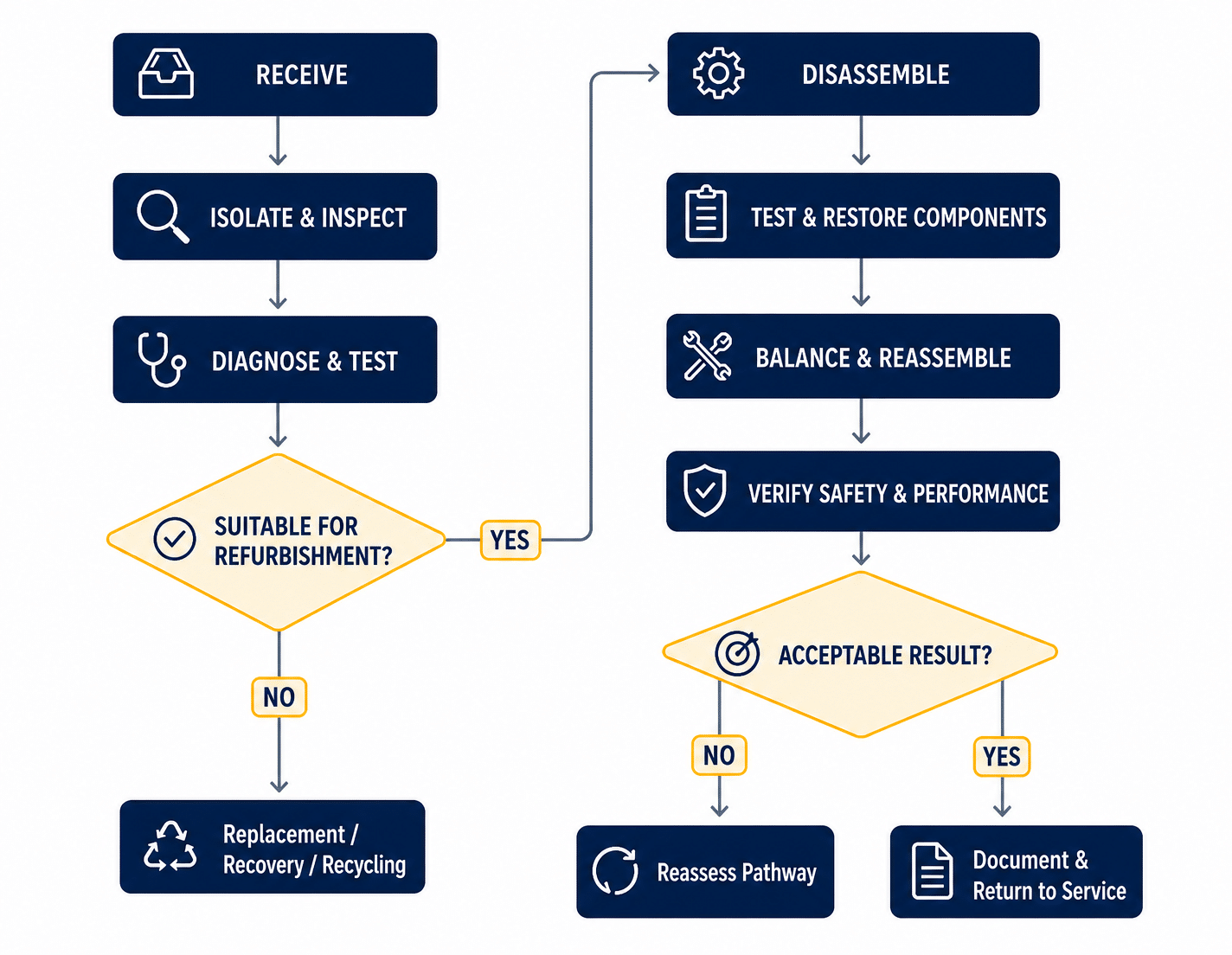
Each step is completed in sequence, with safety and performance verified at every stage.
Vehicle details, battery type, reported symptoms, fault history and available service information are reviewed.
High voltage safety controls are applied. The battery enclosure, terminals, connections and external condition are inspected for overheating, corrosion, impact damage, liquid ingress or contamination.
Relevant fault codes, module or block voltages, voltage consistency, internal resistance, capacity and operating performance are assessed where applicable.
Refurbishment proceeds only where the battery remains structurally sound and has sufficient remaining service potential.
The battery is opened under controlled conditions. Internal components are accessed safely and their condition is examined.
Modules, blocks, busbars, connections, insulation and cooling components are inspected. Defective or unsuitable components are identified, while suitable components may be replaced, reconditioned or balanced where technically appropriate.
Battery components are reinstalled correctly. Electrical connections, fasteners, insulation, protective covers and cooling paths are checked before final testing.
Voltage consistency, electrical integrity, insulation condition, fault status and battery operation are rechecked. Vehicle system performance is tested where applicable.
Assessment findings, work completed, components replaced and final verification results are recorded. Applicable warranty and customer information are then provided.
Refurbishment may be considered where:
Replacement or recycling may be recommended where there is:
Whether your hybrid battery needs a diagnostic, refurbishment, or full replacement, our controlled process starts with an accurate assessment. Book an appointment or contact us to discuss your vehicle.