
Battery Maintenance Tips for Lexus CT200h – Extend Hybrid Battery Life
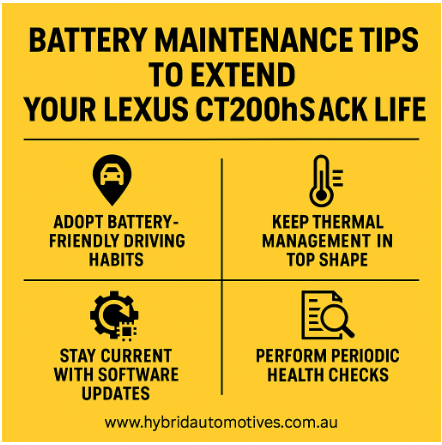
Your Lexus CT200h’s hybrid battery pack is the heart of its efficiency and performance. While Toyota’s NiMH battery packs are built to last, proper maintenance can add years to their service life and help you avoid expensive replacements. This guide shares practical tips—from daily driving habits to periodic inspections—that any CT200h owner can apply to protect their investment and maximize fuel economy. 2. Understanding Your Lexus CT200h Hybrid Battery Pack Before diving into maintenance, it helps to know what you’re working with: Pack Architecture: The CT200h uses a high-voltage NiMH battery pack composed of 28 modules (each module contains six cells in series). Together, they deliver around 6.5 Ah of capacity at roughly 201.6 V nominal. Battery Management System (BMS): An onboard computer continuously monitors cell voltages, temperatures, and state-of-charge (SOC) to optimize pack health and performance. Key Components: Cooling System: An electric fan circulates air over the pack; coolant lines (in later models) help maintain stable temperatures. HV Cabling & Service Plugs: High-voltage cables deliver pack power; service plugs allow safe access for DIY voltage checks. Sensors: Voltage and temperature sensors at each end of the pack feed data to the BMS for balancing and protection. 3. Adopt Battery-Friendly Driving Habits Smooth, moderate driving can significantly reduce stress on your pack: Gentle Acceleration & Braking: Avoid hard launches that draw high current from the pack. Instead, feather the accelerator and use regenerative braking smoothly to recharge cells gradually. Maintain Moderate Cruise Speeds: Sustained highway speeds often force the gasoline engine to power the car, limiting electric-assist opportunities. Staying at or slightly below posted limits maximizes hybrid assist and reduces battery cycling. Prevent Deep-Discharge Cycles: Don’t let the SOC drop to near zero in EV mode. If the battery gets very low, switch to hybrid mode (engine + battery) to top up the pack before the next stop. 4. Keep Your Thermal Management in Top Shape Temperature extremes accelerate battery wear. Here’s how to safeguard your pack’s cooling system: Inspect & Replace Coolant on Schedule: Toyota typically recommends changing hybrid cooling fluid every 100,000 km or 5 years. Check the level in the expansion tank and top up only with Toyota-approved coolant. Ensure Proper Airflow & Fan Operation: Clear leaves, dirt, and debris from the pack vents under the rear seat or cargo area. Listen for fan noise—if it’s louder or slower than usual, have it tested. Park Smart: In hot weather, park in shade or a garage to minimize heat soak. In freezing conditions, shelter the car if possible; NiMH batteries lose capacity in subzero temperatures. 5. Stay Current with Software & Firmware Updates Toyota occasionally issues service bulletins and software updates that refine BMS logic: Check for TSBs: Ask your dealer if any Technical Service Bulletins apply to the CT200h’s hybrid-control software. Updates can adjust charging algorithms and improve cell balancing. Benefits of Calibration: Updated firmware often includes enhanced temperature compensation and SOC estimation, helping your pack age more gracefully. 6. Perform Periodic At-Home Health Checks Regular DIY inspections can catch issues early: Visual Inspection: Look under the rear seat for signs of coolant leakage or corrosion on module terminals. Check high-voltage cabling for frayed insulation or loose connectors. Basic Voltage Spot-Checks: With the service plug removed and a good quality multimeter, measure voltage at each of the two pack terminals. A spread of more than 0.1 V under no-load conditions suggests imbalance; consider professional balancing if the difference exceeds 0.2 V. OBD-II Scan & Data Logging: Use an OBD-II scanner that supports hybrid codes to pull P0A80–P0A8F faults (battery pack issues). Record live data such as pack voltage, individual module voltages, and temperature readings over a short drive to spot anomalies. 7. Mind Environmental & Storage Conditions How and where you leave your car affects pack health over time: Minimize Temperature Extremes: Park in covered or shaded areas in summer; in winter, use a garage or carport if available. Long-Term Storage Tips: If storing the CT200h for weeks or months, charge the battery to around 50–60% SOC (typically “B” on the dashboard gauge), then start and run the hybrid system every 2–3 weeks for 10–15 minutes to let the BMS perform self-tests. 8. When to Seek Professional Inspection Some checks require specialized tools and training: Service Intervals: Even with DIY checks, schedule a full professional hybrid-battery inspection every 60,000 km or every 3–4 years. Workshop Tests: Experts will perform controlled capacity tests, thermal imaging scans, and module-level cell balancing. Red-Flag Symptoms: Persistent “Check Hybrid System” warnings, sudden drops in electric-assist range, or erratic CELs warrant immediate shop attention. 9. Common Mistakes to Avoid Protect your pack by steering clear of these pitfalls: Skipping Cooling-System Maintenance: Old or contaminated coolant can’t regulate temperature effectively, accelerating wear. Ignoring Dashboard Warnings: “Check Hybrid System” lights are early alarms—dismiss them at your own risk. Overloading the Vehicle: Excessive weight (roof racks, heavy cargo) forces the battery and engine to work harder. Aftermarket Mods: Non-OEM chips or performance tunes can confuse the BMS and disrupt balanced charging.
Top 7 Lexus NX300h Hybrid Problems and How to Fix Them Easily
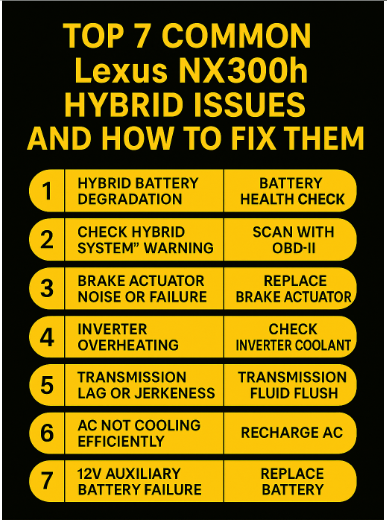
The Lexus NX300h is a popular luxury hybrid SUV known for its refined performance, comfort, and fuel efficiency. While it offers a smooth driving experience and the reliability Lexus is famous for, no vehicle is completely immune to problems—especially when complex hybrid systems are involved. If you own or plan to buy a Lexus NX300h, it’s important to be aware of the most common hybrid-related issues and how to address them before they escalate into costly repairs. In this post, we break down the top 7 common Lexus NX300h hybrid problems and practical solutions to fix each one. 1. Hybrid Battery Degradation Symptoms: Noticeable drop in fuel economy Sluggish acceleration “Check Hybrid System” warning light Causes: Natural wear due to age or mileage Frequent short trips or extreme temperatures Lack of proper maintenance How to Fix: Have a hybrid battery health check performed Replace with an aftermarket, OEM, or rebuilt hybrid battery depending on your budget In Sydney, Hybrid Automotive Service offers cost-effective replacement options with warranty Tip: Get your battery checked every 6–12 months if your car has over 100,000 km. 2. “Check Hybrid System” Warning Symptoms: Warning light appears on dashboard Car may enter limp mode Decreased performance or stalling Causes: Faulty sensors Weak or imbalanced battery cells Inverter or ECU issues How to Fix: Use a hybrid-compatible OBD-II scanner to identify specific codes Consult a hybrid specialist for full diagnostics Repair or replace the affected part (battery, inverter, or sensor) Tip: Don’t drive long distances with this warning. Early diagnosis can save you thousands. 3. Brake Actuator Noise or Failure Symptoms: Clicking or whirring noises when braking ABS or brake warning lights Soft or unresponsive brake pedal Causes: Malfunctioning brake actuator or booster Air in brake lines or hydraulic fluid leaks How to Fix: Replace the brake actuator (can cost between $1,500–$3,000 if not under warranty) Perform a full brake system flush Tip: Check for potential recalls on your VIN through Lexus, as some brake actuators were covered under warranty extensions. 4. Inverter Overheating Symptoms: Sudden power loss Stalling, especially on long drives Hybrid system fault codes Causes: Failing inverter cooling pump Low or dirty coolant Overloaded electrical system How to Fix: Check and top up inverter coolant Replace the inverter coolant pump if necessary Flush old coolant and use recommended Lexus coolant Tip: Avoid cheap universal coolants; always use Toyota/Lexus-approved types. 5. Transmission Lag or Jerkiness Symptoms: Hesitation when accelerating Jerky motion when shifting gears Noise during low-speed operation Causes: E-CVT (Electronic Continuously Variable Transmission) wear Faulty transmission fluid Software calibration issues How to Fix: Perform a transmission fluid flush Reprogram the transmission control unit (TCU) at a Lexus dealer In severe cases, rebuild or replace the transmission system Tip: Hybrid CVTs require specific fluids—always follow the manufacturer’s guidelines. 6. AC Not Cooling Efficiently Symptoms: Warm air from vents during idle AC not cooling on hot days Noises from the AC compressor Causes: Failing electric AC compressor Low refrigerant Blocked condenser or evaporator How to Fix: Recharge refrigerant (R134a or R1234yf, depending on model year) Inspect and service the compressor Clean or replace clogged filters and condenser coils Tip: Have your hybrid AC system serviced annually to maintain peak performance. 7. 12V Auxiliary Battery Failure Symptoms: Car won’t start Multiple dashboard warning lights Radio and power windows malfunction intermittently Causes: Battery older than 3–5 years Parasitic drain from accessories Frequent short trips that don’t allow recharging How to Fix: Replace with a new AGM (Absorbent Glass Mat) 12V battery Check for power-hungry devices or parasitic draw Tip: Test your 12V battery health at every oil change. 🧰 How to Prevent Lexus NX300h Hybrid Problems Get regular hybrid diagnostics from a trusted specialist Follow your Lexus service schedule without delays Use OEM or high-quality aftermarket parts Avoid DIY fixes if you’re not hybrid-trained Visit a hybrid-focused workshop like Hybrid Automotive Service in Sydney for proper evaluation and repairs
Top 10 Common Problems in Lexus RX 400h and How to Fix Them
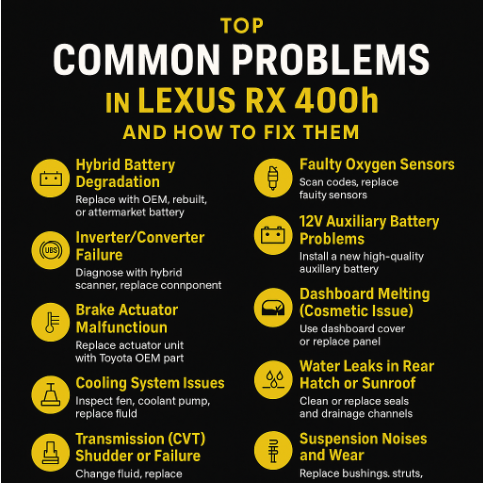
The Lexus RX 400h is a well-regarded luxury hybrid SUV known for its performance, comfort, and fuel efficiency. However, like any vehicle, especially older models from 2006–2008, it’s not without its issues. From hybrid battery failures to brake actuator malfunctions, being aware of these common problems can help you maintain your RX 400h and avoid unexpected breakdowns. At Hybrid Automotive Service, we specialize in diagnosing and repairing all hybrid-related issues with precision and care. 1. Hybrid Battery Degradation Symptoms: Decreased fuel economy, reduced performance, “Check Hybrid System” warning light. Fix: Hybrid battery replacement with OEM, aftermarket, or rebuilt options. We offer high-quality batteries with up to 3 years or 100,000 KM warranty. 2. Inverter/Converter Failure Symptoms: Warning lights, car not starting, sudden stalling. Fix: Diagnostic scan to confirm the fault. Replacement of inverter/converter is often necessary. 3. Brake Actuator Malfunction Symptoms: ABS and VSC warning lights, soft brake pedal, unusual pump noises. Fix: Replacement of the brake actuator with a genuine or refurbished unit. This is a known issue in RX 400h models. 4. Cooling System Issues Symptoms: Overheating, warning messages, poor AC or electrical performance. Fix: Check and replace inverter coolant pump, refill coolant, clean radiator. Regular maintenance can prevent major failures. 5. Transmission (CVT) Problems Symptoms: Hesitation during acceleration, shuddering, jerky shifts. Fix: Transmission fluid flush or, in severe cases, full transmission replacement. 6. Faulty Oxygen Sensors Symptoms: Check Engine Light, poor fuel economy, rough idle. Fix: Scan for trouble codes, replace faulty O2 sensors. This is a relatively inexpensive and quick repair. 7. 12V Auxiliary Battery Problems Symptoms: Difficulty starting, electrical glitches, dashboard not lighting up. Fix: Replace 12V battery. Always use a high-quality replacement for hybrid vehicles. 8. Dashboard Melting (Cosmetic Issue) Symptoms: Sticky, shiny, or melting dashboard under heat. Fix: Install a dashboard cover, or replace under warranty if available. Toyota has covered this issue in some regions. 9. Water Leaks in Rear Hatch or Sunroof Symptoms: Damp carpets, moldy smell, electrical shorts. Fix: Clean sunroof drain channels, inspect and reseal hatch weatherstripping. 10. Suspension Wear and Noises Symptoms: Clunking sounds, rough ride, uneven tire wear. Fix: Replace worn suspension parts like struts, control arms, or bushings. An alignment check is also recommended. How Hybrid Automotive Service Can Help Over 25 years of experience with Lexus and Toyota hybrid systems Accurate diagnostics using hybrid-specific tools OEM, rebuilt, and aftermarket part options Fast turnaround and affordable pricing We provide a 3-year or 100,000 KM warranty on hybrid battery replacements, ensuring peace of mind for our customers.
Hybrid Battery Specialists’ Tips for Maximizing Your Battery Lifespan
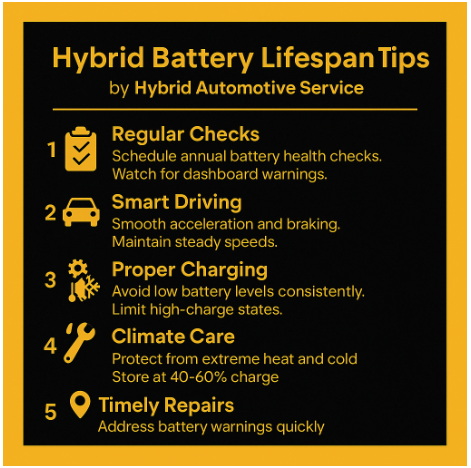
Hybrid vehicles rely on sophisticated battery systems to deliver fuel efficiency and reduced emissions. Maximizing your hybrid battery’s lifespan not only saves money but ensures optimal performance over the long term. At Hybrid Automotive Service, our battery specialists share their expertise to help you maintain your battery’s health. 1. Understand Your Hybrid Battery Hybrid vehicles typically utilize Nickel-Metal Hydride (NiMH) or Lithium-ion batteries. NiMH batteries are robust and common in older models, while Lithium-ion batteries offer lighter weight and better performance in newer models. On average, hybrid batteries last between 8-10 years or around 150,000-200,000 kilometers, though this depends significantly on maintenance and usage patterns. 2. Regular Maintenance and Checks Routine checks are critical. Specialists at Hybrid Automotive Service recommend scheduling a battery health check every 12 months. Key signs your hybrid battery might require attention include: Noticeable drops in fuel efficiency Frequent charging and discharging cycles Dashboard warning lights indicating battery issues Professional diagnostic equipment can identify battery deterioration before it becomes costly. 3. Optimal Driving Habits Your driving style impacts battery life significantly. Here are tips from our specialists: Avoid rapid acceleration and abrupt braking to minimize battery strain. Use regenerative braking effectively to recharge your battery during deceleration. Maintain steady speeds where possible, reducing excessive demands on your battery. 4. Proper Charging Practices While hybrid vehicles manage charging autonomously, adopting certain practices can still help: Avoid consistently driving with an almost-depleted battery. Minimize extended periods of battery idle time at low charge. Avoid prolonged high-charge states to reduce stress on the battery cells. 5. Climate and Storage Considerations Extreme temperatures can adversely affect battery performance. To protect your hybrid battery: Park your vehicle in shaded areas or garages to avoid direct sunlight and excessive heat. In colder climates, allow the vehicle to warm up gradually rather than quick heating. When storing your vehicle for extended periods, specialists at Hybrid Automotive Service recommend leaving the battery charged at approximately 40-60%. 6. Timely Repairs and Professional Advice Responding promptly to battery warnings can prevent extensive damage. Specialists have the tools and training to diagnose battery issues accurately. Trusting general mechanics might lead to missed subtle signs that hybrid battery experts can identify swiftly. 7. Common Misconceptions Debunked At Hybrid Automotive Service, we’ve encountered various myths regarding hybrid batteries: Myth: Hybrid batteries require frequent replacements. Truth: With proper maintenance, most hybrid batteries last beyond their warranty periods, often surpassing 10 years. Myth: DIY repairs can save money. Truth: Hybrid batteries require specialized knowledge and tools, making DIY repairs risky and potentially more costly.
How Much Does It Cost to Replace a Toyota Hybrid Battery?

When owning a Toyota hybrid vehicle, one common concern is the cost of hybrid battery replacement. Whether you’re driving a Prius, Camry Hybrid, or Estima, the battery pack is the heart of your vehicle’s hybrid system. So, how much does it cost to replace a Toyota hybrid battery? Typically, the cost ranges between $1,500 to $4,500 AUD, depending on your vehicle model and the type of battery you choose—aftermarket, rebuilt, or OEM. At Hybrid Automotive Service, we offer affordable pricing tailored to your needs. Why Do Toyota Hybrid Batteries Need Replacing? Toyota hybrid batteries are designed to last, often well beyond 8–10 years or 150,000–200,000 km. However, over time, battery cells degrade due to repeated charging cycles, high temperatures, and usage conditions. When performance drops or warning lights appear (like “Check Hybrid System”), it may be time for a replacement. Factors That Affect Toyota Hybrid Battery Replacement Cost 1. Vehicle Model Different Toyota models use different battery packs. For instance: Toyota Prius (Gen 2–4) battery replacement usually costs $1,500–$3,000 AUD Toyota Camry Hybrid can cost around $2,400–$3,800 AUD Toyota Estima Hybrid may range from $2,500–$5,500 AUD 2. Battery Type At Hybrid Automotive Service, we provide three options: Rebuilt Battery – Most economical, reconditioned cells, costs around $1,500–$2,200 AUD Aftermarket Brand New Battery – New cells with competitive pricing, typically $2,200–$3,000 AUD OEM (Genuine Toyota) – Best quality and lifespan, pricing from $3,200–$4,500 AUD 3. Warranty Coverage Warranties can significantly affect your long-term value. We offer: 1-Year Warranty on rebuilt batteries 2-Year Warranty on aftermarket batteries 3-Year Warranty on OEM batteries This gives you peace of mind no matter your budget. Signs Your Toyota Hybrid Battery Needs Replacement If you notice any of the following, it’s time to get your battery checked: Warning message: “Check Hybrid System” Decreased fuel efficiency Engine running more than usual Loud fan noise from the rear Sudden loss of power or failure to start Bring your vehicle to Hybrid Automotive Service for a Free Battery Health Check. Why Choose Hybrid Automotive Service? We are Sydney’s leading hybrid battery replacement experts. Here’s why customers trust us: Certified Technicians: We specialize in Toyota and Lexus hybrid systems Fast Turnaround: Same-day service available for most models Affordable Options: Flexible pricing to fit all budgets Mobile Service: We come to you in Sydney and surrounding suburbs
How Hybrid Battery Health Impacts Vehicle Resale Value
As the automotive industry transitions toward more eco-friendly solutions, hybrid vehicles have gained significant popularity in Australia. Brands like Toyota and Lexus have dominated this segment with their reliable and efficient hybrid models. However, one of the most critical components of these vehicles—the hybrid battery—plays a significant role not only in performance but also in determining the resale value of your car. At Hybrid Automotive Service, we specialize in hybrid battery diagnostics, repairs, and replacements for Toyota and Lexus vehicles. In this article, we’ll dive deep into how hybrid battery health can make or break the resale value of your hybrid vehicle and how you can maintain it for the best returns. What Is a Hybrid Battery and Why Does It Matter? A hybrid battery is the heart of a hybrid vehicle’s powertrain. It stores and supplies electricity to power the electric motor, working in tandem with the internal combustion engine. This synergy improves fuel economy and reduces emissions. Unlike conventional 12V car batteries, hybrid batteries are high-voltage systems that are far more expensive to replace. Depending on the make and model, replacement costs can range from $2,000 to $5,000 or more. Because of this, the health and remaining life of the battery heavily influence a buyer’s willingness to pay a premium for a used hybrid car. Why Hybrid Battery Health Affects Resale Value 1. Battery Replacement Costs Are High Buyers are aware that replacing a hybrid battery is a major expense. If the battery is nearing the end of its lifespan or showing signs of degradation, prospective buyers may negotiate a significantly lower price—or avoid the purchase altogether. 2. Battery Health Reflects Overall Maintenance A well-maintained hybrid battery often indicates that the vehicle has been responsibly cared for. Hybrid battery diagnostics reveal whether the vehicle has faced overheating issues, excessive charge/discharge cycles, or improper storage—factors that can signal neglect to potential buyers. 3. Diagnostic Readings Can Make or Break a Sale With tools like the Toyota Techstream or professional scanning software, battery health reports have become standard during vehicle inspections. If the battery shows imbalanced modules or a low state of health, it will directly impact the resale price—even if the rest of the car is in excellent condition. 4. Buyers Prefer Vehicles With Warranty or Rebuilt Batteries A vehicle with a recently replaced OEM or high-quality rebuilt hybrid battery, especially one with a warranty (like those offered at Hybrid Automotive Service), offers peace of mind. Buyers are willing to pay more knowing they won’t have to deal with costly replacements in the near future. How to Check the Health of a Hybrid Battery To get a clear picture of your hybrid battery’s condition, a professional diagnostic test is essential. At Hybrid Automotive Service, we provide a detailed report that includes: Module voltage readings State of charge (SOC) balance Internal resistance across modules Cooling fan functionality and cleanliness Battery control module error codes This report not only helps in resale situations but also gives peace of mind to the current owner about the vehicle’s long-term viability. Tips to Maintain Hybrid Battery Health and Maximize Resale Value Regular Cooling System Maintenance Dust and debris in the battery cooling fan can lead to overheating, degrading battery performance. Have it cleaned regularly, especially in dusty or hot climates. Avoid Prolonged Parking Without Driving Hybrid batteries discharge over time when the vehicle is unused. Drive your vehicle at least once a week to keep the battery in optimal condition. Use Regenerative Braking Efficiently Learn to utilize regenerative braking to charge the battery naturally and reduce stress on its cells. Keep Records of Battery Service and Diagnostics Always retain records of battery-related services, replacements, or diagnostics. This reassures potential buyers and adds credibility when discussing the vehicle’s condition. Consider a Reconditioned Battery Before Selling If your battery is aging or underperforming, consider replacing it with a reconditioned or new aftermarket battery from Hybrid Automotive Service. Our batteries come with up to 3-year warranties and significantly boost resale potential.
What are the Benefits of Buying a Lexus Hybrid Over a Non-Hybrid Lexus?

Lexus vehicles have always been synonymous with luxury, reliability, and advanced engineering. In recent years, Lexus hybrids have emerged as the preferred choice for many Australian drivers seeking both sophistication and efficiency. But how exactly do Lexus hybrids differ from their non-hybrid counterparts, and why should you consider choosing one? In this comprehensive guide, we explore the significant advantages of Lexus hybrid models, brought to you by the hybrid experts at Hybrid Automotive Service. Enhanced Fuel Efficiency One of the standout benefits of choosing a Lexus hybrid is the superior fuel efficiency compared to non-hybrid models. Lexus hybrid vehicles, such as the Lexus CT200h or Lexus RX450h, seamlessly combine electric motors with traditional combustion engines. This combination significantly reduces fuel consumption, making your journeys not only greener but also lighter on your wallet. At Hybrid Automotive Service, we frequently see Lexus hybrid drivers enjoying substantial savings at the fuel pump, often experiencing fuel consumption reductions of up to 30% compared to conventional models. Reduced Environmental Impact Lexus hybrids are designed to reduce carbon footprints without sacrificing performance. The integrated electric motor significantly decreases greenhouse gas emissions, offering environmentally conscious drivers a luxury vehicle option aligned with their values. Lexus hybrids like the ES300h and UX250h produce significantly lower emissions than their non-hybrid equivalents. By choosing a Lexus hybrid, you’re actively contributing to a cleaner and healthier environment. Lower Operational Costs Beyond fuel savings, Lexus hybrids typically have lower overall operational costs. The hybrid system places less stress on mechanical components like brakes, thanks to regenerative braking technology. This means reduced wear and tear, fewer replacements, and lower ongoing maintenance costs. Hybrid Automotive Service regularly services Lexus hybrids, observing noticeably extended brake life and fewer mechanical issues compared to conventional Lexus models. Enhanced Driving Experience A common misconception is that hybrid vehicles sacrifice performance. Lexus hybrids dispel this myth. With their hybrid powertrains, models like the Lexus NX300h deliver smooth acceleration, instant torque from electric motors, and exceptionally quiet operation. The seamless transition between electric and petrol modes makes for an enjoyable, refined driving experience. Hybrid Automotive Service clients frequently express satisfaction with their hybrid’s responsive and luxurious ride quality. Improved Resale Value Lexus hybrids typically maintain higher resale values compared to their non-hybrid counterparts. As demand for fuel-efficient, environmentally friendly vehicles continues to grow, Lexus hybrids become highly desirable in the used-car market. Investing in a Lexus hybrid now can mean better returns when you decide to sell or trade-in later. At Hybrid Automotive Service, we’ve seen firsthand how Lexus hybrids hold their value remarkably well, making them smart long-term investments. Government Incentives and Rebates Depending on your state or territory, owning a Lexus hybrid might qualify you for various government incentives or rebates aimed at promoting environmentally friendly transportation. These can significantly reduce the initial purchase cost, making hybrid ownership even more appealing. Check with local authorities or contact Hybrid Automotive Service for the latest information on available incentives in your area. Reliability and Longevity Lexus vehicles are renowned for their reliability, and hybrid models are no exception. The sophisticated hybrid system employed by Lexus is highly durable and designed to last. Hybrid batteries used by Lexus typically offer extensive warranties and often exceed the expected lifespan, ensuring peace of mind for years. At Hybrid Automotive Service, we specialize in hybrid battery diagnostics and replacements, supporting Lexus owners to maximize the lifespan of their hybrid vehicles. Advanced Technology and Comfort Hybrid Lexus models often come with advanced features and technologies not available in conventional models. This includes specialized driving modes, enhanced infotainment systems, and state-of-the-art safety features tailored specifically for hybrid operation. Owners of Lexus hybrids appreciate the advanced integration of technology and luxury, enhancing their daily driving comfort and convenience.
Why You Can’t Drive a Hybrid Car with a Dead Battery
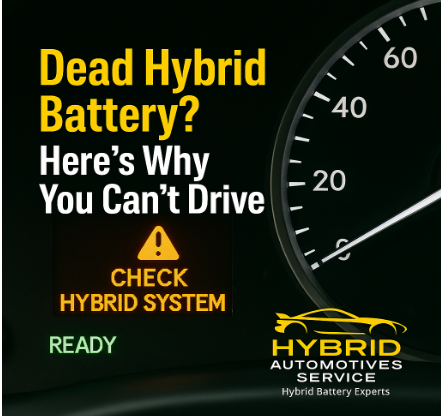
Hybrid vehicles are engineered with a delicate balance of internal combustion engines and electric propulsion systems. At the heart of this balance lies the hybrid battery — a high-voltage power source that plays a critical role in starting the vehicle, powering electric motors, and enhancing fuel efficiency. But what happens when this battery dies? If you’ve ever wondered why you can’t drive a hybrid car with a dead hybrid battery, you’re not alone. Let’s dive into the reasons behind this common hybrid concern — brought to you by Hybrid Automotive Service, your trusted specialist in hybrid battery replacement across Sydney. 🔋 Understanding the Role of a Hybrid Battery The hybrid battery is not just an optional component — it’s a core part of the vehicle’s powertrain. Whether it’s a Toyota or a Lexus, the hybrid battery: Powers the electric motor during startup and low-speed driving Supports the petrol engine during acceleration Stores energy from regenerative braking Enables seamless transition between electric and gas modes 🚫 Why You Can’t Drive with a Dead Hybrid Battery Here are the main technical reasons why your hybrid vehicle becomes undrivable when the hybrid battery fails: 1. Hybrid Cars Rely on Battery for Startup Most hybrids, especially Toyota and Lexus models, require the high-voltage battery to start the car. If the hybrid battery is dead or disconnected, the vehicle cannot reach “READY” mode — meaning the petrol engine won’t even turn on. 2. Electric Motor Depends on Battery Power Hybrid vehicles use the electric motor for initial torque, idling, and sometimes even full electric driving. With a dead battery: The electric motor cannot operate The internal combustion engine alone cannot handle all functions Performance and drivability drop to zero 3. Computer Systems Shut Down for Safety Modern hybrids are loaded with safety mechanisms. A dead hybrid battery triggers fail-safes in the ECU (engine control unit), cutting off major systems and displaying errors like: “Check Hybrid System” “Ready mode not available” These are deliberate shutdowns to protect the vehicle’s electronics and prevent further damage. 4. Charging System Malfunction Unlike conventional cars, hybrids don’t have alternators. They rely on the hybrid battery to: Maintain the 12V system Power electronic modules If the hybrid battery fails, the 12V battery may drain, leaving you completely stranded. 💡 What Should You Do If Your Hybrid Battery Dies? If you suspect a battery failure, don’t wait. Contact Hybrid Automotive Service for: Free Hybrid Battery Health Checks Professional Diagnosis Rebuilt, Brand New, or Genuine OEM Hybrid Batteries On-site Mobile Installation Across Sydney 🛠️ Expert Tip: Driving with a weak or failing hybrid battery can increase wear on your petrol engine and even trigger irreversible inverter or ECU damage. ✅ Final Thoughts A hybrid car with a dead hybrid battery is not drivable — not because of a mechanical failure, but because it breaks the essential hybrid system loop. Without that loop, the car can’t start, move, or regenerate power. That’s why it’s crucial to keep your hybrid battery in optimal condition. Need help? Trust Hybrid Automotive Service, Sydney’s leading expert in Toyota and Lexus hybrid battery replacements. Call us today or book a battery diagnostic online — and get back on the road with confidence.
Top Lexus CT200h Hybrid Battery Error Codes and Their Solutions
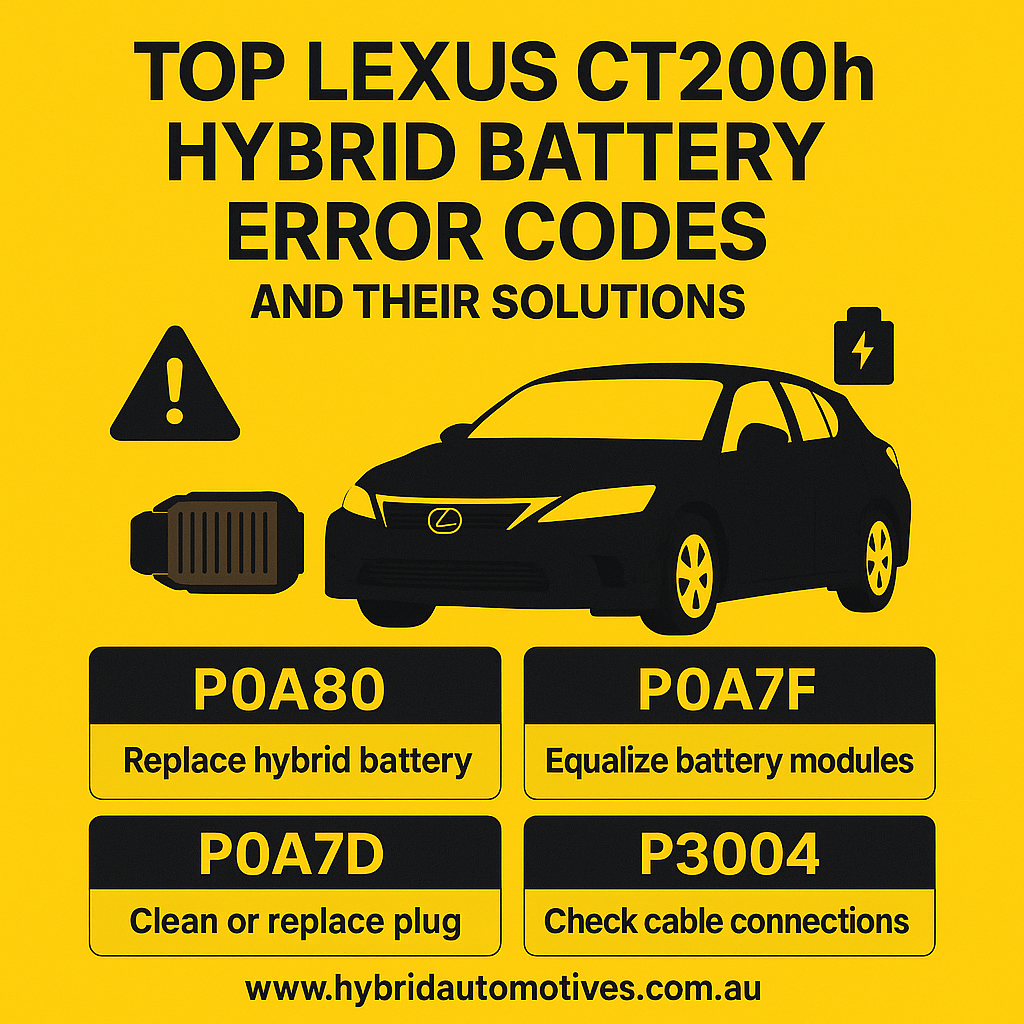
The Lexus CT200h is a reliable hybrid vehicle, blending efficiency with performance. However, like any sophisticated system, it may occasionally encounter issues, especially within its hybrid battery system. To help owners and technicians diagnose and address these problems, the CT200h uses Diagnostic Trouble Codes (DTCs). This article will explore the most common hybrid battery error codes and provide detailed solutions for each. Understanding Hybrid Battery Error Codes The Lexus CT200h’s hybrid battery system is equipped with numerous sensors and control modules that monitor its performance. When an issue arises, the system triggers specific error codes that can be read using a diagnostic scanner. These codes help pinpoint the exact problem, saving time and effort in troubleshooting. Common Lexus CT200h Hybrid Battery Error Codes P0A80: Replace Hybrid Battery Pack This code indicates that the hybrid battery pack’s performance has degraded below acceptable levels. It is one of the most common codes and usually means the battery has reached the end of its life. Symptoms: Reduced fuel economy Warning lights on the dashboard Noticeable decrease in power Solution: Replace the hybrid battery pack with a new or reconditioned unit. Ensure the replacement battery is compatible with the CT200h. Perform a system calibration after replacement. P0A0D: High Voltage System Interlock Circuit High This error occurs when there is an issue with the interlock circuit, which ensures safe operation of the high-voltage system. Symptoms: Vehicle fails to start “Check Hybrid System” warning on the dashboard Solution: Inspect the interlock circuit for loose or damaged connections. Verify that the high-voltage safety plug is properly installed. Reset the error code using a diagnostic tool after repairs. P0AC0: Hybrid/EV Battery Pack Current Sensor A Circuit Range/Performance This code points to a problem with the current sensor monitoring the hybrid battery pack. Symptoms: Inconsistent charging and discharging of the hybrid battery Decreased vehicle performance Solution: Inspect the battery pack’s current sensor for damage or misalignment. Replace the faulty sensor if needed. Clear the code and test the system to ensure proper function. P0AFC: Hybrid/EV Battery Pack Sensor Module Issue This error indicates a malfunction in the sensor module that monitors the battery’s voltage and temperature. Symptoms: Irregular battery performance Vehicle may enter limp mode to protect the system Solution: Check for loose or corroded connections in the sensor module. Replace the sensor module if it’s defective. Perform a full system reset to clear the error. P0B47: Hybrid/EV Battery Voltage Sense C Circuit Low This code signals that the voltage sensor in the hybrid battery pack is reading lower than expected. Symptoms: Diminished battery efficiency Potential overheating of the battery pack Solution: Inspect the voltage sensing wires for damage or disconnection. Replace the faulty sensor or repair the wiring. Clear the code and monitor the system for recurring issues. U029A: Lost Communication With Hybrid/EV Battery Pack Sensor Module This code appears when the system cannot communicate with the battery pack’s sensor module. Symptoms: Multiple warning lights on the dashboard Vehicle may not start or function properly Solution: Check the wiring and connectors between the battery pack and the ECU. Replace the sensor module if communication cannot be restored. Use a diagnostic scanner to reset the code after repairs. Preventative Maintenance Tips To minimize the risk of encountering these error codes, regular maintenance is crucial. Here are a few tips to keep your Lexus CT200h hybrid battery in top condition: Monitor Battery Performance: Pay attention to any warning signs, such as reduced fuel efficiency or sluggish performance. Perform Regular Inspections: Have a certified technician inspect the hybrid system at regular intervals. Maintain Proper Cooling: Ensure the battery cooling fan is clean and functioning correctly to prevent overheating. Use Quality Components: Always use OEM or high-quality aftermarket parts for repairs and replacements.
Hybrid Battery Cooling Maintenance
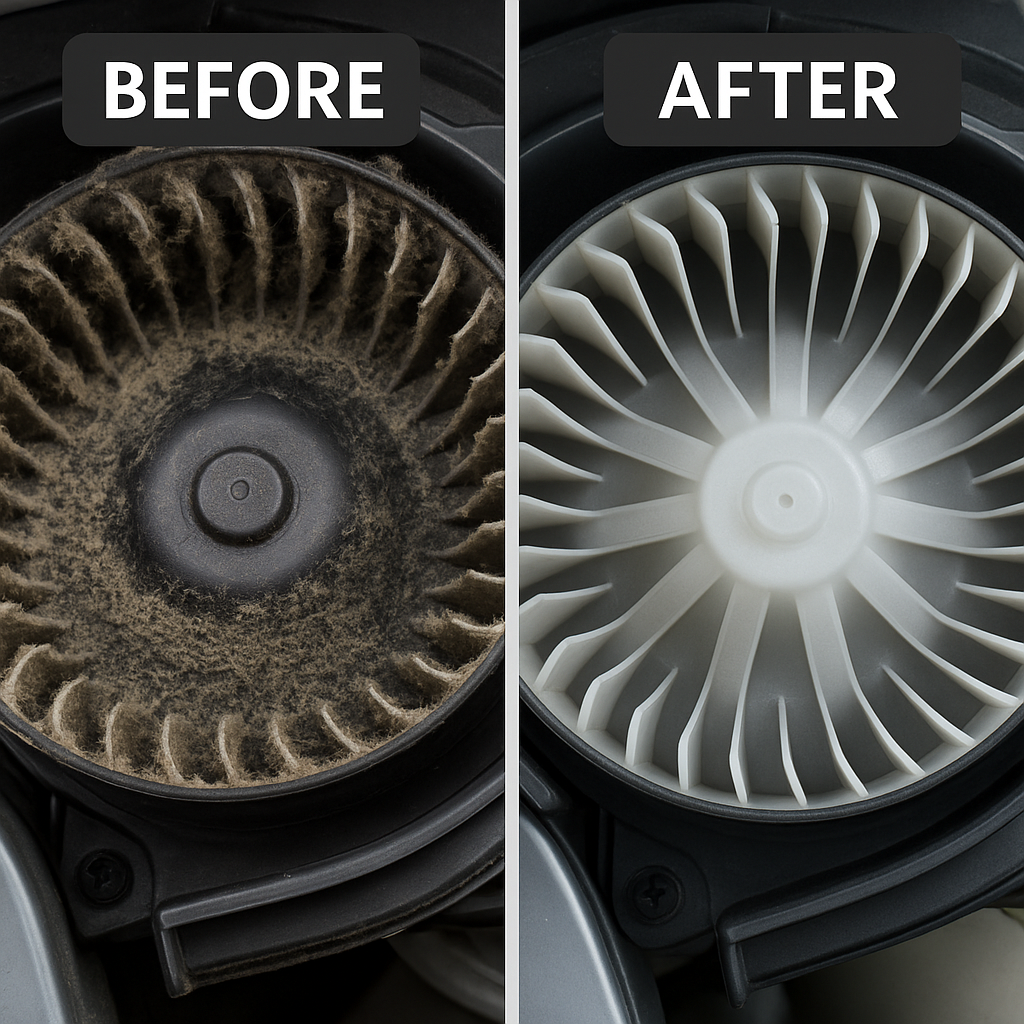
Toyota Prius, Camry, and Lexus models require proper maintenance of the Hybrid Battery Cooling System every 6 Months to ensure optimal performance and avoid costly issues. Neglecting this essential upkeep can lead to the accumulation of Dust and debris in the cooling system, significantly impairing the battery’s cooling efficiency. This may result in diagnostic trouble codes (DTC) such as P0A80 (Replace Hybrid Battery) or P0A7F (Indicating dust and debris-related issues). The Problem: Dust and Debris in Cooling Systems Over time, dust, lint, and other debris can accumulate in the air intake vents and cooling fans of hybrid vehicles. This issue is particularly common in vehicles frequently driven in dusty environments or those carrying pets, as fur and dirt can clog the system. When airflow is restricted, the hybrid battery cannot dissipate heat effectively, leading to overheating. A clear warning sign of this problem is the dashboard message: “Maintenance Required for Traction Battery Cooling Parts.” Ignoring this alert can exacerbate the issue, affecting the battery’s efficiency and longevity. Consequences of Ignoring the Issue Failing to address hybrid battery cooling system blockages can lead to significant and potentially hazardous consequences. Below are the detailed adverse effects with relevant diagnostic trouble codes (DTCs) and real-life automotive hazards: Reduced Battery Efficiency (DTC P0A7F – Hybrid Battery Pack Deterioration): A compromised cooling system causes the high-voltage (HV) battery to overheat, reducing its ability to charge and discharge efficiently. This inefficiency results in lower fuel economy, diminished electric motor performance, and an increased reliance on the internal combustion engine. Over time, this can degrade the hybrid system’s operational effectiveness, causing power surges or limp mode activation, especially during high-demand scenarios like steep inclines or rapid acceleration. Accelerated Battery Wear (DTC P0A80 – Replace Hybrid Battery): Persistent overheating accelerates the degradation of individual battery cells, leading to premature wear. The Vehicle’s onboard diagnostics may trigger DTC P0A80, showing the need to replace the entire hybrid battery pack. Continuous operation under such conditions can increase internal resistance within the cells, further straining the system and reducing the battery’s overall lifespan. Costly Repairs or Replacements: Neglected cooling systems not only degrade the battery but can also damage associated components such as the HV cooling fan and air intake ducts. A damaged cooling fan may result in DTC P0A94 (DC/DC Converter Performance Malfunction) or P0C73 (Drive Motor “A” Temperature Sensor Circuit Low), reflecting faults in temperature management. Repair costs for cooling fans, ductwork, or battery replacement can run into thousands of dollars, especially in vehicles no longer under warranty. Safety Hazards (Thermal Runaway Risk): Overheating batteries can lead to conditions where cell temperatures rise uncontrollably, risking thermal runaway—a potentially catastrophic failure that may result in smoke, fire, or explosion. DTCs such as P3000 (Battery Control System Malfunction) and P3190 (Poor Engine Power) may also manifest as the vehicle’s systems attempt to mitigate the overheating, further stressing the powertrain components. Real-Life Automotive Hazards: In real-world scenarios, a blocked cooling system can lead to mid-journey breakdowns, especially in high-temperature climates or during prolonged idling in traffic. Overheated batteries may shut down the hybrid system to prevent damage, leaving drivers stranded. Additionally, compromised cooling can affect auxiliary systems reliant on battery performance, such as regenerative braking and start-stop functionality, increasing wear on the braking system and fuel consumption. Technical Insight: Hybrid battery cooling systems are vital for dissipating heat generated during the high-voltage battery’s charge/discharge cycles. Regular maintenance, such as cleaning the air intake vents and replacing clogged filters, ensures consistent airflow and prevents overheating. Use of specialized diagnostic tools like Techstream can help monitor real-time battery temperatures and system performance, allowing for early detection and remediation of potential issues. To ensure the safety and longevity of your Toyota Prius, Camry, or Lexus hybrid, it’s essential to schedule routine inspections and address any DTCs promptly. The Solution: Professional Maintenance Servicesby Hybrid Automotive Service Regular maintenance of the Hybrid Battery Cooling system is vital to avoid these issues. At Hybrid Automotive Service, we specialize in professional cleaning and diagnostics to ensure your vehicle remains in top condition. Comprehensive Cleaning: Our technicians thoroughly clean the cooling fan, air intake vents, and ducts to remove all dust and debris. We use advanced tools and methods to ensure efficient cleaning without pushing debris deeper into the system. Filter Inspection and Replacement: Filters play a critical role in preventing debris from entering the cooling system. We inspect and replace filters as needed, especially for vehicles exposed to heavy use or dusty environments. System Diagnostics: Our experts perform detailed diagnostics to identify potential problems before they escalate. Warning codes are cleared, and test drives confirm that the system operates as intended. Why Choose Us? Expertise in Hybrid Vehicles: We specialize in Toyota and Lexus hybrids, offering tailored solutions for their unique needs. Cost-Effective Solutions: Preventative maintenance saves you money by reducing the risk of major repairs. Customer-Centric Service: Our transparent approach ensures you understand the services your vehicle requires.