
Maximizing Cold Weather Performance of Hybrid Car Batteries

Hybrid cars have become popular lately because they save fuel and are good for the environment. The most important part of these cars is their batteries, which power the electric motors and store energy. However, one challenge faced by hybrid car owners, particularly in colder climates, is maximizing the performance of their batteries in cold weather conditions. Understanding Cold Weather Impact Cold weather can have a detrimental effect on the performance of hybrid car batteries. When it gets cold, the chemical reactions in the battery slow down, making it less efficient at delivering power. This phenomenon, often referred to as “cold weather degradation,” can lead to decreased range and overall performance of the vehicle. Factors Affecting Cold Weather Performance Several factors contribute to the diminished performance of hybrid car batteries in cold weather. Impact of Temperature on Performance Temperature plays a fundamental role in battery performance. Cold temperatures can cause batteries to lose capacity and efficiency due to slower chemical reactions. Conversely, high temperatures can lead to overheating and accelerated degradation. Understanding the differences in performance between cold and hot weather conditions is essential for implementing effective management strategies. Chemical Reactions in Cold Conditions Batteries work by using chemical reactions to make electricity. When it’s cold, these reactions happen slower, so the battery can’t give power as well. This happens a lot with lithium-ion batteries, like the ones in phones and electric cars. Cold weather makes the battery harder to use, causing it to lose power and work less effectively. Battery Capacity and Efficiency Cold weather can also affect the overall capacity and efficiency of batteries. When it gets colder, the battery doesn’t hold as much power. This means that a battery that can provide a certain amount of energy at room temperature may deliver less energy in cold weather conditions. Additionally, the efficiency of the battery may be reduced, leading to increased energy losses and decreased overall performance. External Factors In addition to temperature, several other external factors can influence cold weather performance. Humidity levels, wind chill, and elevation can all impact the behavior of batteries in cold weather conditions. It’s important to know and consider these things so we can predict how well the battery will work and come up with good plans to manage it. Technological Solutions To address the challenges of cold weather performance, various technological solutions have been developed. We can use heaters to keep the battery at the right temperature, so it works well even when it’s cold outside. Additionally, insulation and thermal management systems can help to minimize heat loss and maintain stable operating temperatures. Maintenance Practices Taking care of the battery regularly is important to make sure it works well in cold weather and lasts a long time. This includes ensuring proper insulation, checking for any signs of damage or degradation, and keeping the battery charged and maintained at optimal levels. Doing these things can make sure the cold doesn’t make the battery work badly and keep it working well. Case Studies and Examples Looking at real examples helps us understand the problems and fixes for batteries not working well in the cold. Success stories from industries such as automotive, aerospace, and renewable energy highlight the importance of addressing factors affecting cold weather performance and the benefits of implementing effective management strategies. Future Trends Looking ahead, advancements in battery technology and cold weather performance management are expected to continue. Innovations such as improved materials, advanced thermal management systems, and predictive analytics hold the potential to further enhance cold-weather performance and reliability. Researching and improving is important to make batteries work their best in cold weather. Strategies for Maximizing Cold Weather Performance Cold temperatures can affect various systems, causing fluid thickening, reduced traction, and increased energy consumption. Understanding these challenges is crucial for developing effective strategies to overcome them. Engine Warm-up Techniques It’s important to let the engine warm up properly for it to work well in cold weather. Techniques such as using block heaters, idling for a few minutes before driving, and selecting the appropriate viscosity oil can help reduce friction and ensure smoother operation. Tire Maintenance and Traction Management Maintaining proper tire pressure and using winter tires with good traction is critical for safe driving in icy or snowy conditions. Regularly checking tire tread depth and rotating tires can also improve traction and stability on cold roads. Battery Optimization Cold weather can significantly impact battery performance, leading to decreased efficiency and capacity. Insulating the battery, using heating systems, and managing charging patterns can help maintain optimal operation and extend battery life. Fluid Management Proper maintenance of antifreeze, windshield washer fluid, and other fluids is essential for preventing freezing and ensuring smooth operation of vehicle systems in cold weather. Regular inspections and top-ups can help avoid disruptions and costly repairs. Equipment Preparation and Storage Equipment and machinery should be properly prepared and stored during cold weather to prevent damage and ensure reliable operation. This includes lubrication, insulation, and periodic maintenance to mitigate the effects of freezing temperatures. Environmental Considerations In addition to vehicle and equipment maintenance, it’s essential to consider environmental factors in cold weather. Protecting vegetation, wildlife, and outdoor structures from freezing temperatures can help minimize the impact of winter conditions.
Decoding P3016: Hybrid Battery Assembly Fault Explained

The P3016 code is a diagnostic trouble code (DTC) that indicates a potential issue with the hybrid battery assembly in your vehicle. This code can trigger the check engine light and lead to performance issues if left unaddressed. Grasping the potential causes and solutions for this code is crucial for preserving the well-being of your hybrid vehicle. Fix this P3016 The Possible Causes of the DTC P3016 Toyota? Battery Cell Degradation: Over time, the individual cells within the hybrid battery assembly can degrade, leading to reduced performance and triggering the P3016 code. Battery Module Failure: If one or more modules within the hybrid battery assembly fail, it can cause voltage irregularities and trigger the P3016 code. Temperature Extremes: Exposure to extreme temperatures, whether excessively hot or cold, can hasten the deterioration of the hybrid battery assembly, resulting in performance issues and activating the P3016 diagnostic trouble code. Poor Maintenance: Lack of proper maintenance, such as failing to regularly inspect and service the hybrid battery assembly, can lead to premature failure and trigger the P3016 code. How to Fix the DTC P3016 Toyota? Battery Replacement: In many cases, resolving the P3016 code requires replacing the entire hybrid battery assembly with a new or refurbished unit. This ensures optimal performance and reliability. Module Replacement: If the issue is isolated to specific modules within the hybrid battery assembly, replacing those modules individually can be a cost-effective solution to address the P3016 code. Temperature Management: Implementing measures to regulate the temperature of the hybrid battery assembly, such as installing thermal insulation or using a cooling system, can help mitigate the risk of triggering the P3016 code due to temperature extremes. Regular Maintenance: Performing routine inspections and maintenance on the hybrid battery assembly, including checking for signs of degradation and ensuring proper charging and discharging cycles, can help prevent issues that lead to the P3016 code. Cost to Diagnose The cost to diagnose and repair the P3016 code associated with a faulty hybrid battery assembly can vary depending on several factors, including the make and model of your vehicle, the extent of the issue, and labor costs. It’s crucial to seek advice from a certified technician or authorized dealership for a precise evaluation and cost estimation. The P3016 code related to a faulty hybrid battery assembly should not be ignored, as it can lead to further performance issues and potentially compromise the safety and reliability of your vehicle. Understanding the possible causes and solutions outlined above can help you effectively address this issue and ensure the continued operation of your hybrid vehicle.
Hybrid Battery Assembly P3015 Troubleshooting

Hybrid vehicles provide an environmentally conscious alternative to conventional gasoline-powered cars, yet they present distinctive challenges of their own. One such challenge arises when a fault code P3015 appears, indicating potential issues with the hybrid battery assembly. Comprehending the potential causes and remedies can assist in effectively resolving this issue. Fix this P3015 Probable Causes Battery Degradation: Over time, hybrid batteries can degrade due to normal wear and tear, leading to reduced performance and triggering fault codes like P3015. Cell Imbalance: Imbalance among the individual cells within the hybrid battery assembly can cause voltage variations, resulting in error codes and diminished overall battery efficiency. Temperature Extremes: Exposing hybrid batteries to extreme temperatures, whether excessively hot or cold, can hasten their degradation and contribute to the occurrence of fault codes. Charging System Malfunction: Issues with the vehicle’s charging system, such as a faulty charger or charging control module, can impact the hybrid battery’s health and trigger error codes like P3015. Effective Solutions Battery Replacement: In cases of severe degradation or damage to the hybrid battery assembly, installing a new or refurbished unit may be necessary to address the P3015 fault code. Cell Balancing: Professional recalibration or cell balancing procedures can help restore balance among the individual cells within the hybrid battery assembly, improving overall performance and resolving error codes. Temperature Management: Implementing measures to regulate the temperature of the hybrid battery, such as installing thermal insulation or using climate control systems, can mitigate the impact of temperature extremes on battery health. Charging System Diagnosis and Repair: A thorough diagnosis of the vehicle’s charging system by a qualified technician can identify and address any underlying issues contributing to the P3015 fault code, such as malfunctioning chargers or control modules. Cost Considerations The cost of diagnosing a P3015 fault code related to a faulty hybrid battery assembly can vary depending on various factors, including the vehicle make and model, the extent of the issue, and the labor rates of the service provider. It is advisable to contact a professional automotive technician or dealership for an accurate cost estimate tailored to your specific situation. Addressing a P3015 fault code associated with a faulty hybrid battery assembly requires a thorough understanding of the potential causes and appropriate repair solutions. By taking proactive measures to maintain the health of your hybrid vehicle’s battery system and promptly addressing any emerging issues, you can ensure optimal performance and prolong the lifespan of your vehicle’s hybrid components.
Diagnosing P3014: Hybrid Battery Assembly Issues

The emergence of the P3014 fault code in hybrid vehicles can signal a range of issues, but one common culprit is a malfunctioning hybrid battery assembly. This code, often accompanied by warning lights on the dashboard, requires prompt attention to ensure the vehicle’s optimal performance and longevity. Let’s examine the potential causes of this code and investigate solutions to address it effectively. Fix this P3014 Understanding the P3014 Code: Possible Causes Degraded Battery: Over time, the cells within the hybrid battery pack can degrade, leading to diminished performance and triggering fault codes like P3014. Battery Cooling System Malfunction: Inadequate cooling or malfunctioning of the battery’s cooling system can cause overheating, affecting battery performance and triggering fault codes. Faulty Battery Management System: Issues with the battery management system, responsible for monitoring and controlling the hybrid battery, can lead to erroneous fault codes like P3014. Physical Damage or Corrosion: Physical damage to the battery pack or corrosion on terminals can disrupt electrical connections, leading to fault codes and performance issues. Software Glitches: Sometimes, software glitches or bugs in the vehicle’s onboard computer systems can erroneously trigger fault codes like P3014. Resolving the P3014 Code: How to Fix Diagnostic Scan: Begin by conducting a diagnostic scan using specialized diagnostic tools to pinpoint the exact cause of the fault code. Battery Inspection: Examine the hybrid battery assembly for any physical damage, corrosion, or leaks. Attend to any identified issues promptly during the examination. Testing Battery Cells: Perform a comprehensive test on individual battery cells to identify any degraded or malfunctioning cells that might be causing the fault code. Check Cooling System: Ensure that the battery cooling system is functioning correctly. Clean or repair cooling components as necessary to prevent overheating issues. Update Software: If a software glitch triggers the fault code, updating the vehicle’s software to the latest version may resolve the issue. Replace Faulty Components: If any components within the hybrid battery assembly or the battery management system are found to be faulty, replace them with genuine parts recommended by the manufacturer. Professional Assistance: Seek the expertise of qualified technicians or specialists experienced in hybrid vehicle repair if you’re unsure about diagnosing or fixing the issue yourself. Cost to Diagnose The expense associated with diagnosing and repairing the P3014 fault code may fluctuate based on factors such as the severity of the issue, the make and model of the vehicle, and the labor rates charged by the repair facility. It is recommended to reach out to nearby automotive repair shops or dealerships to obtain precise pricing details. The P3014 fault code associated with faulty hybrid battery assembly requires thorough diagnostic procedures and targeted solutions. By understanding the potential causes and following appropriate repair steps, hybrid vehicle owners can ensure optimal performance and reliability.
P3013 Error Code: Troubleshooting and Resolution Guide
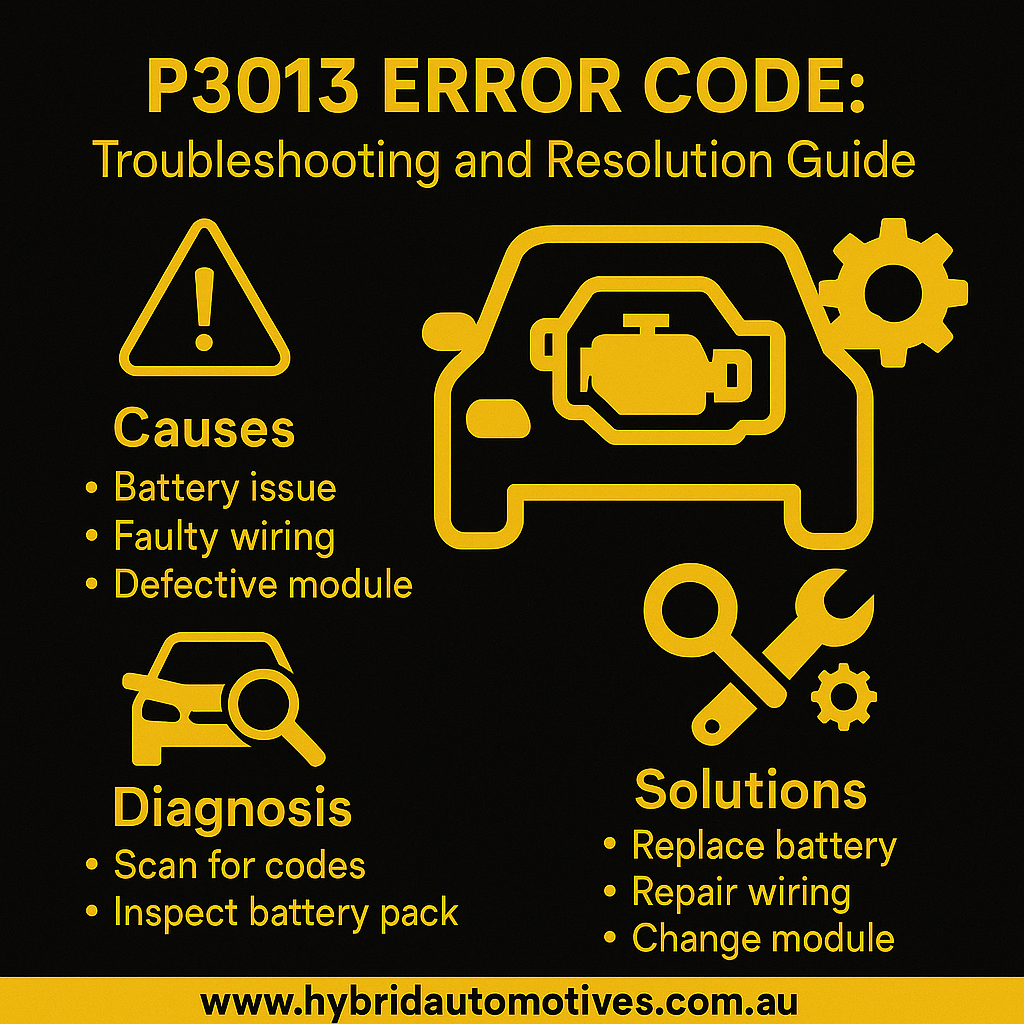
In hybrid vehicles, the P3013 fault code can be a concerning signal of trouble within the hybrid battery assembly. As a driver, encountering this code can trigger a cascade of questions regarding the root cause, potential fixes, and associated costs. We will delve into the possible causes of the P3013 code, methods to address it, and considerations regarding the cost of diagnosis and repair. Fix this P3013 Understanding the P3013 Code The P3013 code specifically pertains to hybrid vehicles and indicates an issue within the hybrid battery assembly. This code typically signifies a malfunction or irregularity in the performance of the battery, affecting the vehicle’s hybrid system’s efficiency and functionality. While the code itself provides a clear indication of trouble, diagnosing the precise cause requires a comprehensive assessment of various components and systems. Possible Causes of the P3013 Code Degraded Battery Cells: Over time, the individual cells within the hybrid battery can degrade due to age, usage patterns, and environmental conditions. Degradation can lead to diminished battery capacity and efficiency, triggering fault codes like P3013. Faulty Battery Management System (BMS): The BMS is responsible for monitoring and managing the hybrid battery’s performance and health. A malfunctioning BMS may misinterpret data or fail to regulate the battery’s operation effectively, resulting in fault codes such as P3013. Electrical Issues: Wiring faults, loose connections, or damaged electrical components within the hybrid system can disrupt the flow of power to and from the battery assembly, causing irregularities that trigger fault codes. Temperature Extremes: Exposure to extreme temperatures, whether excessively high or low, can expedite battery degradation and compromise its performance, potentially resulting in the appearance of fault codes such as P3013. How to Fix the P3013 Code Resolving the P3013 code requires a systematic approach to identify and address the underlying cause. Here are some common steps taken to rectify this issue: Diagnostic Assessment: A thorough diagnostic procedure, typically performed by trained technicians using specialized tools and software, is necessary to pinpoint the exact cause of the fault code. This assessment may involve testing the battery cells, inspecting the BMS, and examining the electrical system for anomalies. Battery Replacement or Repair: Depending on the severity of the problem and the extent of damage to the battery assembly, repair or replacement may be required. In some cases, individual faulty cells can be replaced, while in others, the entire battery pack may need to be swapped out. BMS Calibration or Replacement: If the fault lies with the battery management system, recalibration or replacement of the BMS may be required to ensure proper monitoring and control of the battery’s operation. Addressing Electrical Faults: Any identified electrical faults or wiring issues must be rectified to restore the integrity of the hybrid system and prevent future occurrences of fault codes. Cost to Diagnose and Repair The cost associated with diagnosing and repairing the P3013 code can vary significantly depending on factors such as the vehicle’s make and model, the extent of the issue, and the labor rates charged by the service provider. Diagnostic fees typically range from modest amounts to higher charges for more complex assessments involving advanced diagnostic equipment. Repair costs can encompass the expense of parts, labor, and any additional services required to resolve the issue comprehensively. Given the variability in costs, hybrid vehicle owners should obtain multiple quotes from reputable service centers and weigh their options carefully before proceeding with diagnosis and repair.
Troubleshooting Code P3012: Battery Block 1 Weakness
The P3012 fault code can be particularly troublesome for hybrid vehicle owners, as it frequently points to underlying issues within the hybrid battery assembly. We provide a comprehensive exploration of the potential causes that could trigger this code, offering practical solutions for resolving the issue and shedding light on the associated costs of diagnosis. Hybrid vehicles rely on a sophisticated interplay of traditional combustion engines and electric power systems, with the hybrid battery assembly is a critical component in this dynamic equation. When the vehicle’s onboard diagnostics detect a problem within this crucial system, it often manifests as the P3012 fault code, prompting owners to seek swift resolution. Fix this P3012 Understanding the Possible Causes Battery Cell Degradation: Over time, hybrid batteries can experience cell degradation, leading to reduced performance and triggering fault codes like P3012. Factors such as age, usage patterns, and environmental conditions can accelerate this degradation. Thermal Runaway: High temperatures can cause thermal runaway in hybrid batteries, leading to internal damage and triggering fault codes. This can occur due to overcharging, prolonged exposure to heat, or poor ventilation within the battery assembly. Voltage Imbalance: Voltage imbalances among battery cells can result from manufacturing defects, poor maintenance, or irregular charging patterns. Such imbalances can cause the battery management system to detect abnormalities and generate fault codes P3012. Internal Faults: Internal faults within the hybrid battery assembly, such as short circuits or damaged wiring, can trigger the P3012 code. These faults may arise due to manufacturing defects, physical damage, or wear and tear over time. Methods for Repair& Replacement Battery Replacement: In cases of severe degradation or internal faults, replacing the hybrid battery assembly may be necessary. This involves removing the old battery and installing a new one, ensuring compatibility with the vehicle’s specifications. Cell Balancing: If voltage imbalances are detected, cell balancing techniques can be employed to equalize the charge across battery cells. This may involve using specialized equipment or software to recalibrate the battery management system. Thermal Management: Implementing effective thermal management systems can help prevent thermal runaway and extend the lifespan of hybrid batteries. This may include improving cooling mechanisms, enhancing insulation, or installing temperature sensors to monitor battery temperatures. Diagnostic Testing: Thorough diagnostic testing is crucial to pinpoint the exact cause of the P3012 code. This may involve using diagnostic tools to analyze battery performance, check for voltage irregularities, and identify any internal faults. Associated Diagnostic Costs The cost of diagnosing a P3012 fault code can vary depending on several factors, including the make and model of the vehicle, the complexity of the issue, and the labor rates of the service provider. Since diagnostic fees are typically not standardized, it’s advisable to contact a certified mechanic or dealership for an accurate price estimate.
Improving Fuel Efficiency with Hybrid Car Batteries

Hybrid vehicles have become a popular choice for eco-conscious drivers, offering significant fuel efficiency improvements compared to traditional gasoline-powered cars. The key to this efficiency lies within the hybrid battery. Explores how to optimize your hybrid battery’s performance to maximize your fuel economy and environmental impact. Understanding the Hybrid Battery’s Role: Hybrid batteries, typically lithium-ion, act as energy storage units. They capture energy from regenerative braking and power the electric motor for low-speed driving and engine restarts. The more efficiently the battery operates, the less reliance there is on the gasoline engine, leading to improved fuel economy. Optimizing Battery Performance for Efficiency: In a world reliant on technology, optimizing battery performance is key. Join us as we explore strategies for efficiency and longevity. Master Regenerative Braking: Regenerative braking saves energy when you slow down or stop, turning it into electricity for the battery. Anticipate traffic flow and practice smooth, controlled braking to maximize energy capture. Coasting to a stop whenever possible further increases efficiency. Driving Style Matters: Aggressive acceleration, frequent high-speed driving, and unnecessary use of the gasoline engine put a strain on the battery and decreased fuel efficiency. Aim for smooth, steady acceleration and maintain a moderate cruising speed. Embrace Eco Mode: Some hybrids have a mode called “Eco Mode” that saves gas. This mode may limit acceleration but optimizes electric motor usage, reducing reliance on the gasoline engine. Preconditioning (Optional): Some hybrids offer preconditioning features that use the gasoline engine to regulate battery temperature before driving. This helps in very hot or cold weather because a warm battery works better. However, use it judiciously to minimize gasoline consumption. Minimize Accessory Usage: Excessive use of climate control systems and power-hungry accessories like heated seats or phone chargers can drain the battery faster, forcing the gasoline engine to work harder. Utilize these features efficiently to maximize electric power usage. Maintaining Battery Health for Long-Term Efficiency: Maintaining battery health is vital for long-term efficiency. Highlights key practices to preserve battery lifespan and optimize performance. Let’s explore strategies for ensuring sustainable energy use. Parking Strategies: Extreme temperatures can negatively impact battery health. Park in shaded areas or garages whenever possible, especially during hot or cold weather. Charging Habits: While convenient, frequent fast charging can degrade battery health over time. Utilize standard charging whenever possible for optimal battery longevity and efficiency. Follow Manufacturer Recommendations: Hybrid battery systems may require specific maintenance or software updates. Check your car’s manual and do what it says to take care of the battery. Strategies for Optimizing Fuel Efficiency with Hybrid Car Batteries Hybrid car batteries help the car use less gas and pollute less. Here are some strategies to optimize fuel efficiency with hybrid car batteries: Utilize Electric Mode: Many hybrid vehicles offer an electric mode that allows them to operate solely on electric power for short distances. Utilize this mode during city driving or low-speed commutes to minimize fuel consumption and emissions. Maximize Regenerative Braking: Regenerative braking turn’s energy from braking into electricity for the battery. If you drive smoothly and know when to stop, you can save more energy and use the brakes less, which helps save gas. Monitor Battery Charge: Keep an eye on the battery charge level and aim to maintain it within the optimal range. Avoid letting the battery drain completely and recharge it regularly to ensure it’s ready to assist the internal combustion engine when needed, leading to improved fuel efficiency. Drive Efficiently: Try driving in ways that save gas, like slowly speeding up, keeping the same speed, and not stopping suddenly. These practices not only reduce fuel consumption but also help prolong the lifespan of the hybrid battery by minimizing strain on the engine and battery. Plan Routes Wisely: When possible, plan your driving routes to minimize unnecessary stops and maximize efficiency. Opt for routes with less traffic congestion and fewer stoplights to reduce the frequency of acceleration and braking, thereby conserving fuel and extending battery life. Maintain Proper Tire Pressure: Keeping your tires filled up with the right amount of air can help you use less gas. If your tires don’t have enough air, it’s harder for the car to move, so it uses more gas. Make sure to check your tires and fill them up to the right amount regularly to save gas. Avoid Excessive Idling: Idling consumes fuel unnecessarily and contributes to pollution. Don’t let your car sit and run for too long without moving—turn off the engine when you’re parked or waiting for a while. Hybrid vehicles can utilize their electric power for accessories such as air conditioning and entertainment systems without running the engine, further conserving fuel. Additional Tips: Tire Pressure: Make sure your tires have enough air in them like your car’s maker says. If they’re not full enough, it’s harder for the car to move, so it uses more gas. Route Planning: Plan your trips to minimize stop-and-go traffic. Hybrids excel at maintaining efficiency at consistent speeds. Anticipate Traffic: Smooth driving with fewer sudden stops allows for better utilization of regenerative braking and electric motor power. The Rewards of Optimization: By implementing these strategies, you can reap significant benefits: Increased Fuel Economy: A well-maintained and efficiently operated battery translates to a significant reduction in gasoline consumption, saving you money at the pump. Reduced Emissions: Using less gas means you make less pollution, which helps keep the air cleaner. Extended Battery Life: Proper care and driving habits can significantly extend the lifespan of your hybrid battery, reducing replacement costs and environmental impact.
Troubleshooting P3011: Hybrid Battery Assembly Fault

In hybrid vehicles, the P3011 code can be a cause for concern. This diagnostic trouble code (DTC) indicates a Fault in the Hybrid Battery Assembly, potentially disrupting the smooth functioning of the vehicle. Understanding the possible causes behind this issue and the steps to remedy it is essential for hybrid vehicle owners and technicians alike. Let’s delve into the depths of the P3011 code and explore its nuances. Fix this P3011 Possible Causes DTC P3011 Degradation of Battery Cells: Over time, the cells within the hybrid battery pack can degrade due to usage and environmental factors. This degradation can lead to a decrease in battery performance and trigger the P3011 code. Faulty Battery Management System (BMS): The BMS is responsible for monitoring and managing the hybrid battery pack. If there is a malfunction or error within the BMS, it may incorrectly interpret battery data, resulting in the P3011 code being generated. Internal Battery Module Issues: Individual modules can experience faults or failures within the hybrid battery pack. These issues may include internal shorts, cell imbalances, or physical damage, all of which can contribute to the triggering of the P3011 code. Temperature Sensing Problems: Hybrid battery performance is heavily influenced by temperature. If there are inaccuracies or malfunctions in the temperature sensors associated with the battery pack, it can lead to improper battery management and the generation of fault codes such as P3011. How to Fix the DTC P3011 Diagnostic Scan: The first step in addressing the P3011 code is to conduct a comprehensive diagnostic scan using specialized equipment. This scan will provide insight into the specific nature of the fault and help pinpoint the underlying cause. Battery Inspection: Once the fault has been identified, a thorough inspection of the hybrid battery assembly is necessary. This may involve testing individual battery cells, assessing the condition of the BMS, and checking for any physical damage or abnormalities within the battery pack. Repair or Replacement: Depending on the seriousness of the problem, repairs may be viable to correct the fault within the hybrid battery assembly. However, in cases of significant degradation or irreparable damage, replacing the entire battery pack may be the most viable solution. Calibration and Reset: Following any repairs or replacements, it’s crucial to calibrate the BMS and reset any fault codes stored within the vehicle’s system. This ensures that the hybrid vehicle operates optimally and prevents the recurrence of the P3011 code. Cost to Diagnose The expense of diagnosing and fixing a P3011 code can fluctuate considerably based on multiple factors, such as the hybrid vehicle’s make and model, the severity of the fault in the battery assembly, and the service provider’s labor rates. Due to the specialized nature of hybrid vehicle maintenance, it is recommended to consult with a qualified technician or dealership for an accurate cost estimate. Call for Cost.
Optimizing Power Output: Hybrid Car Battery Performance

Hybrid car batteries are crucial for being eco-friendly. They enable electric propulsion, regenerative braking, and improved fuel efficiency. However, maximizing a hybrid battery’s power output requires understanding its capabilities and driving habits. This article delves into methods to optimize your hybrid battery performance for a greener and more efficient driving experience. Understanding Hybrid Battery Operation: Hybrid batteries, typically lithium-ion, work in tandem with the gasoline engine. They store energy captured during regenerative braking and power the electric motor for low-speed driving and engine restarts. The battery’s health and operating conditions significantly impact power output. Factors Affecting Power Output: Battery Health: Over time, battery capacity degrades, reducing power output. Factors like extreme temperatures, frequent deep discharges, and rapid charging can accelerate this process. Ambient Temperature: Batteries perform best within a moderate temperature range. Very hot or cold weather can make the battery work less well and use less energy. Driving Style: Aggressive acceleration, frequent high-speed driving, and unnecessary use of the gasoline engine strain the battery and decrease power output. Optimizing Power Output for Efficiency: Regenerative Braking Techniques: Practice anticipating traffic flow and using regenerative braking whenever possible. This saves more energy for the battery and means you don’t need to use the gas engine as much. Moderate Acceleration: Avoid aggressive acceleration and maintain a steady cruising speed. This minimizes strain on the battery and optimizes electric motor usage. Preconditioning (Optional): Some hybrids offer preconditioning features that use the gasoline engine to regulate battery temperature before driving. This is good, especially in very hot or cold weather. Utilize Eco Mode: Many hybrids offer an eco mode that optimizes engine and battery usage for fuel efficiency. This mode may limit acceleration but maximizes electric motor use. Maintaining Battery Health for Long-Term Performance: Parking Strategies: Avoid parking in extreme heat or cold whenever possible. Opt for shaded areas or garages for extended parking. Charging Habits: While convenient, frequent fast charging can degrade battery health over time. Utilize standard charging whenever possible for optimal battery longevity. Manufacturer Recommendations: Do what the manufacturer says to take care of the hybrid battery. This might mean getting updates or following certain rules for charging. Tips for Optimizing Hybrid Car Battery Performance It’s important to make sure your hybrid car battery works well to save energy and last longer. Here are some tips for optimizing power output and enhancing the performance of your hybrid car battery: Regular Maintenance: Get regular checks to catch any problems with your hybrid car battery early. This includes monitoring battery health indicators, inspecting charging connectors, and ensuring proper ventilation to prevent overheating. Keep Battery Charged: Maintain the battery charge level within the recommended range to optimize power output. Avoid letting the battery drain completely and aim to recharge it before it reaches a low charge level to prevent damage and maintain performance. Utilize Regenerative Braking: Use the brakes that save energy to collect and keep the energy made when you brake. This energy can then be used to recharge the battery, reducing the need for external charging and enhancing overall efficiency. Drive Efficiently: Adopting energy-efficient driving habits can help optimize power output from your hybrid car battery. Drive smoothly, keep a steady speed, and don’t let the car sit and run for no reason to save energy and make the battery last longer. Avoid Extreme Temperatures: Very hot or cold weather can make the battery work less well and use less energy. Avoid exposing the battery to prolonged periods of extreme heat or cold, as it can lead to degradation and reduced power output. Park in shady spots or garages when you can keep the battery from getting too hot or cold. Optimize Charging Times: Charge your hybrid car battery when electricity costs less, usually at times when fewer people are using it. Additionally, consider using programmable charging timers to start and stop charging at optimal times, maximizing efficiency and reducing charging costs. Monitor Battery Health: Regularly monitor the health of your hybrid car battery and address any issues promptly. Keep an eye on battery health indicators and seek professional maintenance if you notice any signs of degradation or performance decline. By maintaining battery health, you can ensure optimal power output and prolong battery lifespan. The Benefits of Optimization: By optimizing your hybrid battery performance, you can achieve: Increased Fuel Efficiency: A well-maintained and efficiently operated battery reduces reliance on the gasoline engine, leading to significant fuel savings. Reduced Emissions: Lower fuel consumption translates to a smaller carbon footprint and a cleaner driving experience. Extended Battery Life: Taking good care of your hybrid battery and driving carefully can make it last longer, so you don’t have to spend money on a new one. Additional Considerations: Climate Control: Excessive use of climate control systems can strain the battery, especially in extreme temperatures. Utilize these features efficiently to minimize impact. Accessory Usage: Avoid unnecessary accessory usage like heated seats or phone chargers while relying solely on electric power. These can drain the battery faster. FAQs How often should I get my hybrid car battery checked? It’s recommended to schedule maintenance checks for your hybrid car battery at least once every six months or as recommended by the manufacturer. Regular checks help identify potential issues early on and ensure optimal performance. How do I know if my hybrid car battery needs fixing or replacing? Signs that your hybrid car battery may need maintenance or replacement include decreased fuel efficiency, warning lights or indicators on the dashboard, difficulty starting the vehicle, and reduced driving range. If you see any of these signs, it’s a good idea to have a professional check your battery. Can I overcharge my hybrid car battery? Modern hybrid car batteries are equipped with built-in management systems to prevent overcharging. However, it’s still essential to follow manufacturer recommendations and avoid leaving the vehicle plugged in for extended periods unnecessarily. Charging too much can make the battery work less well and not last as long.
Hybrid Car Battery Replacement Guide: What You Need to Know

Hybrid cars have become increasingly popular in recent years because of their environmentally friendly design and fuel efficiency. These vehicles operate using both an internal combustion engine and an electric motor, leading to lower emissions and increased fuel economy. However, one crucial component of hybrid cars that requires attention is the battery system. Signs of a Failing Hybrid Car Battery Hybrid car batteries play a vital role in powering the electric motor and supporting the internal combustion engine. Decreased Fuel Efficiency A prominent early indicator of a declining hybrid car battery is a noticeable drop in fuel efficiency. As the battery loses its ability to hold a charge, the vehicle may rely more heavily on the gasoline engine, resulting in higher fuel consumption. Observing gas mileage and taking note of any substantial decreases can aid in detecting potential battery issues. Engine Light Turns On The check engine light serves as a warning indicator for various vehicle issues, including potential battery problems. If the check engine light turns on, it’s crucial to have the vehicle examined by a certified technician. Neglecting warning signs can result in additional damage and more costly repairs in the future. Loss of Power and Acceleration A failing hybrid car battery can also manifest as a loss of power and acceleration. When the battery struggles to provide sufficient power to the electric motor, the vehicle may feel sluggish and unresponsive during acceleration. Addressing performance issues promptly can prevent further deterioration of the battery system. Reduced Battery Life Indicator Many hybrid vehicles are equipped with battery life indicators that provide information about the health of the battery system. If the battery life indicator shows a significant decrease in capacity, it may indicate a failing battery. Ignoring these warnings can result in unexpected battery failure and vehicle breakdowns. Engine Stalling or Difficulty Starting In severe instances, a failing hybrid car battery might lead to the engine stalling or make it challenging to start the vehicle. These symptoms indicate a significant battery-related issue that requires immediate attention. Ignoring starting problems can leave you stranded and necessitate costly repairs. Types of Hybrid Car Batteries Hybrid vehicles employ various battery types, such as nickel-metal hydride (NiMH) and lithium-ion (Li-ion) batteries. Each type has its own set of advantages and disadvantages, with NiMH batteries being more common in older hybrid models and Li-ion batteries becoming increasingly prevalent in newer models. Factors to Consider Before Replacement Before delving into the replacement procedure, it’s crucial to grasp the importance of evaluating different factors. Age and Mileage of the Vehicle One of the primary considerations before replacing a hybrid car battery is the age and mileage of the vehicle. Older vehicles with greater mileage might experience more significant battery degradation, making replacement a more urgent matter. Battery Health and Degradation Assessing the health status and degradation of the existing battery is crucial. Signs such as decreased fuel efficiency and reduced performance indicate that the battery may need replacement. Cost of Replacement Replacing a hybrid car battery can be a significant investment. It’s essential to consider factors such as the cost of the battery itself, installation fees, and any additional expenses associated with the replacement process. Warranty Coverage Checking warranty coverage is vital before replacing a hybrid car battery. Certain manufacturers provide extended warranties for hybrid batteries, which can substantially lower replacement expenses. Compatibility and Performance Ensuring compatibility with the vehicle’s make and model is essential when choosing a replacement battery. Moreover, assessing the performance specifications of replacement options ensures optimal performance and efficiency. Environmental Impact Considering the environmental impact of replacement choices is increasingly important. Opting for sustainable and eco-friendly battery replacement options can minimize environmental harm. DIY vs. Professional Replacement While some car owners may consider replacing the hybrid car battery themselves to save costs, others prefer hiring a professional technician for the job. DIY replacement requires technical expertise and specialized tools, whereas professional replacement ensures proper installation and warranty coverage. Steps for Hybrid Car Battery Replacement For those considering DIY replacement, following a step-by-step guide is essential to ensure a successful outcome. The process involves disconnecting the old battery, installing the new battery, and resetting the vehicle’s onboard computer system to recognize the new battery. Maintenance Tips for Hybrid Car Batteries To prolong the lifespan of hybrid car batteries, regular maintenance is crucial. This involves avoiding deep discharges, maintaining the battery’s coolness, and arranging regular inspections with a certified technician. Adhering to these maintenance tips can enhance the lifespan and performance of hybrid car batteries.