
Check Hybrid System Warning – What It Means & How We Fix It
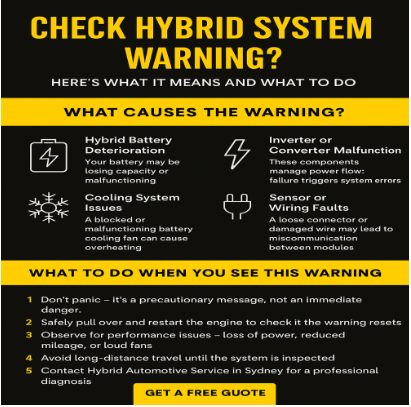
Seeing the “Check Hybrid System” warning on your Toyota or Lexus dashboard? This usually indicates an issue with the hybrid battery, inverter, or other critical components. While it might seem alarming, it’s a system alert designed to protect your vehicle — and our hybrid experts in Sydney are here to help you fix it fast and affordably. What Causes the “Check Hybrid System” Warning? This warning typically points to a fault in the hybrid drive system. Here are the most common causes: 🔋 Hybrid Battery Deterioration Your battery may be losing capacity or malfunctioning. ⚡ Inverter or Converter Malfunction These components manage power flow; failure triggers system errors. ❄️ Cooling System Issues A blocked or malfunctioning battery cooling fan can cause overheating. 🔌 Sensor or Wiring Faults A loose connector or damaged wire may lead to miscommunication between modules. 💻 ECU/Software Errors Corrupted software or firmware updates may generate false warnings. What To Do When You See This Warning Don’t panic – it’s a precautionary message, not an immediate danger. Safely pull over and restart the engine to check if the warning resets. Observe performance issues – loss of power, reduced mileage, or loud fans. Avoid long-distance travel until the system is inspected. Contact Hybrid Automotive Service for a professional diagnosis. Can You Drive with the “Check Hybrid System” Light On? You can technically drive for a short distance, but it’s not recommended. Continuing to drive may: Cause further damage to battery or electrical systems Trigger limp mode or complete system failure Invalidate your warranty (if applicable) How We Diagnose the Hybrid System in Sydney At Hybrid Automotive Service, we use OEM-grade tools and certified diagnostics to pinpoint the problem: ✅ OBD2 Scan for exact fault codes ✅ Live data monitoring ✅ Battery health check (voltage, resistance, balance) ✅ Visual inspection of wiring, sensors & cooling systems How Much Does It Cost to Fix the Warning? Cost depends on the root cause — here’s an estimate: Minor wiring or reset: $99 – $150 Cooling system service: $150 – $300 Hybrid battery reconditioning or replacement: $1,200 – $3,800 📍 Get a Free Diagnosis Quote – call us or book online. Why Choose Hybrid Automotive Service? 🛠️ Toyota & Lexus Hybrid Specialists 🚗 Mobile Service Available in Sydney & Surrounds 🔋 OEM, Rebuilt & Aftermarket Battery Options 🛡️ 3-Year / 100,000 KM Warranty 🕒 Same-Day Diagnosis in Most Cases FAQs About “Check Hybrid System” Q1: Can I reset the warning light myself? Yes, but it’s not recommended. You’ll need an OBD2 tool. Resetting without fixing the issue can hide a serious problem. Q2: Is it always the battery? Not always. It can be sensors, cooling fans, wiring, or inverter faults. Q3: Can you come to my location? Yes! We provide Mobile Diagnosis and Repair Service, Across Sydney. Q4: How long does it take to fix? Diagnosis takes 30–60 minutes. Repairs may range from 1 hour to 1 day based on parts and issue type.
What Does a Hybrid System Malfunction Mean?
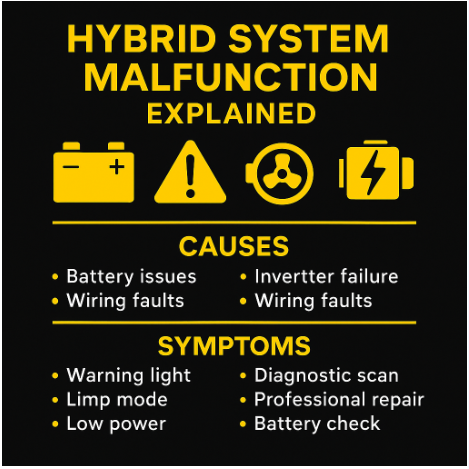
Hybrid vehicles, combining internal combustion engines with electric propulsion systems, offer improved fuel efficiency and reduced emissions. However, when a “Hybrid System Malfunction” warning appears, it signals that the vehicle’s hybrid components are not operating correctly. Understanding this warning is crucial for maintaining your vehicle’s performance and safety. Understanding the Hybrid System Malfunction Warning The “Hybrid System Malfunction” warning light indicates that the vehicle’s onboard diagnostics have detected an issue within the hybrid system. This system encompasses components such as: High-voltage battery pack Electric motor(s) Inverter/converter units Hybrid control modules Associated wiring and sensors When a fault is detected in any of these components, the system triggers the warning light to alert the driver of potential issues that may affect the vehicle’s performance or safety. Common Causes of Hybrid System Malfunctions Several factors can lead to a hybrid system malfunction: Battery Degradation: Over time, the high-voltage battery may lose its ability to hold a charge, leading to reduced performance or system errors. Inverter/Converter Failure: These components manage the flow of electricity between the battery and electric motor. Malfunctions can disrupt power delivery. Sensor Issues: Faulty sensors can send incorrect data to the control modules, causing the system to misbehave. Wiring Problems: Damaged or corroded wiring can interrupt communication between hybrid components. Cooling System Failures: Hybrid systems generate heat; if the cooling system fails, it can lead to overheating and component damage. Symptoms Accompanying the Warning When the hybrid system malfunction warning is active, you may notice: Reduced Fuel Efficiency: The vehicle may rely more on the gasoline engine, decreasing overall efficiency. Limited Power Output: The car might enter a “limp mode,” restricting speed and acceleration to prevent further damage. Unusual Noises: Whining or grinding sounds may emanate from the electric motor or inverter. Difficulty Starting: The vehicle may struggle to start or fail to start altogether. Immediate Actions to Take If the hybrid system malfunction warning appears: Safely Pull Over: If driving, find a safe location to stop the vehicle. Restart the Vehicle: Sometimes, restarting can reset the system. However, if the warning persists, further action is needed. Avoid Driving: Continuing to drive may cause additional damage. It’s advisable to have the vehicle inspected promptly. Consult a Professional: Schedule a diagnostic check with a qualified technician experienced in hybrid systems. Diagnostic and Repair Process Diagnosing a hybrid system malfunction involves: Computer Diagnostics: Using specialized tools to read error codes and identify faulty components. Physical Inspection: Checking wiring, connectors, and components for visible damage or wear. Performance Testing: Assessing the functionality of the battery, inverter, and motor under various conditions. Repairs may range from software updates to component replacements. Costs can vary significantly based on the issue’s complexity and the parts involved. Contact Hybrid Automotive Service to Fix Hybrid System Malfunction Error. Preventative Measures To minimize the risk of hybrid system malfunctions: Regular Maintenance: Follow the manufacturer’s recommended service schedule. Monitor Battery Health: Keep an eye on battery performance and address issues promptly. Protect Electrical Components: Ensure that the vehicle’s electrical systems are shielded from moisture and contaminants. Stay Informed: Keep up-to-date with recalls or service bulletins related to your vehicle’s hybrid system.
How Hybrid Battery Health Impacts Vehicle Resale Value
As the automotive industry transitions toward more eco-friendly solutions, hybrid vehicles have gained significant popularity in Australia. Brands like Toyota and Lexus have dominated this segment with their reliable and efficient hybrid models. However, one of the most critical components of these vehicles—the hybrid battery—plays a significant role not only in performance but also in determining the resale value of your car. At Hybrid Automotive Service, we specialize in hybrid battery diagnostics, repairs, and replacements for Toyota and Lexus vehicles. In this article, we’ll dive deep into how hybrid battery health can make or break the resale value of your hybrid vehicle and how you can maintain it for the best returns. What Is a Hybrid Battery and Why Does It Matter? A hybrid battery is the heart of a hybrid vehicle’s powertrain. It stores and supplies electricity to power the electric motor, working in tandem with the internal combustion engine. This synergy improves fuel economy and reduces emissions. Unlike conventional 12V car batteries, hybrid batteries are high-voltage systems that are far more expensive to replace. Depending on the make and model, replacement costs can range from $2,000 to $5,000 or more. Because of this, the health and remaining life of the battery heavily influence a buyer’s willingness to pay a premium for a used hybrid car. Why Hybrid Battery Health Affects Resale Value 1. Battery Replacement Costs Are High Buyers are aware that replacing a hybrid battery is a major expense. If the battery is nearing the end of its lifespan or showing signs of degradation, prospective buyers may negotiate a significantly lower price—or avoid the purchase altogether. 2. Battery Health Reflects Overall Maintenance A well-maintained hybrid battery often indicates that the vehicle has been responsibly cared for. Hybrid battery diagnostics reveal whether the vehicle has faced overheating issues, excessive charge/discharge cycles, or improper storage—factors that can signal neglect to potential buyers. 3. Diagnostic Readings Can Make or Break a Sale With tools like the Toyota Techstream or professional scanning software, battery health reports have become standard during vehicle inspections. If the battery shows imbalanced modules or a low state of health, it will directly impact the resale price—even if the rest of the car is in excellent condition. 4. Buyers Prefer Vehicles With Warranty or Rebuilt Batteries A vehicle with a recently replaced OEM or high-quality rebuilt hybrid battery, especially one with a warranty (like those offered at Hybrid Automotive Service), offers peace of mind. Buyers are willing to pay more knowing they won’t have to deal with costly replacements in the near future. How to Check the Health of a Hybrid Battery To get a clear picture of your hybrid battery’s condition, a professional diagnostic test is essential. At Hybrid Automotive Service, we provide a detailed report that includes: Module voltage readings State of charge (SOC) balance Internal resistance across modules Cooling fan functionality and cleanliness Battery control module error codes This report not only helps in resale situations but also gives peace of mind to the current owner about the vehicle’s long-term viability. Tips to Maintain Hybrid Battery Health and Maximize Resale Value Regular Cooling System Maintenance Dust and debris in the battery cooling fan can lead to overheating, degrading battery performance. Have it cleaned regularly, especially in dusty or hot climates. Avoid Prolonged Parking Without Driving Hybrid batteries discharge over time when the vehicle is unused. Drive your vehicle at least once a week to keep the battery in optimal condition. Use Regenerative Braking Efficiently Learn to utilize regenerative braking to charge the battery naturally and reduce stress on its cells. Keep Records of Battery Service and Diagnostics Always retain records of battery-related services, replacements, or diagnostics. This reassures potential buyers and adds credibility when discussing the vehicle’s condition. Consider a Reconditioned Battery Before Selling If your battery is aging or underperforming, consider replacing it with a reconditioned or new aftermarket battery from Hybrid Automotive Service. Our batteries come with up to 3-year warranties and significantly boost resale potential.
What are the Benefits of Buying a Lexus Hybrid Over a Non-Hybrid Lexus?

Lexus vehicles have always been synonymous with luxury, reliability, and advanced engineering. In recent years, Lexus hybrids have emerged as the preferred choice for many Australian drivers seeking both sophistication and efficiency. But how exactly do Lexus hybrids differ from their non-hybrid counterparts, and why should you consider choosing one? In this comprehensive guide, we explore the significant advantages of Lexus hybrid models, brought to you by the hybrid experts at Hybrid Automotive Service. Enhanced Fuel Efficiency One of the standout benefits of choosing a Lexus hybrid is the superior fuel efficiency compared to non-hybrid models. Lexus hybrid vehicles, such as the Lexus CT200h or Lexus RX450h, seamlessly combine electric motors with traditional combustion engines. This combination significantly reduces fuel consumption, making your journeys not only greener but also lighter on your wallet. At Hybrid Automotive Service, we frequently see Lexus hybrid drivers enjoying substantial savings at the fuel pump, often experiencing fuel consumption reductions of up to 30% compared to conventional models. Reduced Environmental Impact Lexus hybrids are designed to reduce carbon footprints without sacrificing performance. The integrated electric motor significantly decreases greenhouse gas emissions, offering environmentally conscious drivers a luxury vehicle option aligned with their values. Lexus hybrids like the ES300h and UX250h produce significantly lower emissions than their non-hybrid equivalents. By choosing a Lexus hybrid, you’re actively contributing to a cleaner and healthier environment. Lower Operational Costs Beyond fuel savings, Lexus hybrids typically have lower overall operational costs. The hybrid system places less stress on mechanical components like brakes, thanks to regenerative braking technology. This means reduced wear and tear, fewer replacements, and lower ongoing maintenance costs. Hybrid Automotive Service regularly services Lexus hybrids, observing noticeably extended brake life and fewer mechanical issues compared to conventional Lexus models. Enhanced Driving Experience A common misconception is that hybrid vehicles sacrifice performance. Lexus hybrids dispel this myth. With their hybrid powertrains, models like the Lexus NX300h deliver smooth acceleration, instant torque from electric motors, and exceptionally quiet operation. The seamless transition between electric and petrol modes makes for an enjoyable, refined driving experience. Hybrid Automotive Service clients frequently express satisfaction with their hybrid’s responsive and luxurious ride quality. Improved Resale Value Lexus hybrids typically maintain higher resale values compared to their non-hybrid counterparts. As demand for fuel-efficient, environmentally friendly vehicles continues to grow, Lexus hybrids become highly desirable in the used-car market. Investing in a Lexus hybrid now can mean better returns when you decide to sell or trade-in later. At Hybrid Automotive Service, we’ve seen firsthand how Lexus hybrids hold their value remarkably well, making them smart long-term investments. Government Incentives and Rebates Depending on your state or territory, owning a Lexus hybrid might qualify you for various government incentives or rebates aimed at promoting environmentally friendly transportation. These can significantly reduce the initial purchase cost, making hybrid ownership even more appealing. Check with local authorities or contact Hybrid Automotive Service for the latest information on available incentives in your area. Reliability and Longevity Lexus vehicles are renowned for their reliability, and hybrid models are no exception. The sophisticated hybrid system employed by Lexus is highly durable and designed to last. Hybrid batteries used by Lexus typically offer extensive warranties and often exceed the expected lifespan, ensuring peace of mind for years. At Hybrid Automotive Service, we specialize in hybrid battery diagnostics and replacements, supporting Lexus owners to maximize the lifespan of their hybrid vehicles. Advanced Technology and Comfort Hybrid Lexus models often come with advanced features and technologies not available in conventional models. This includes specialized driving modes, enhanced infotainment systems, and state-of-the-art safety features tailored specifically for hybrid operation. Owners of Lexus hybrids appreciate the advanced integration of technology and luxury, enhancing their daily driving comfort and convenience.
Why You Can’t Drive a Hybrid Car with a Dead Battery
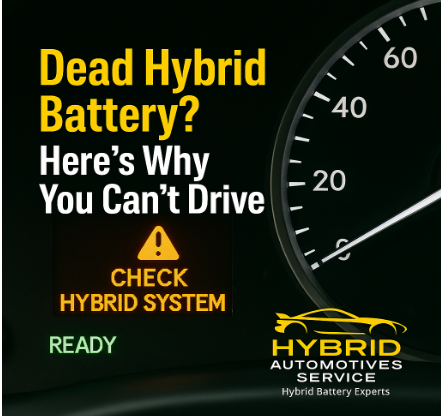
Hybrid vehicles are engineered with a delicate balance of internal combustion engines and electric propulsion systems. At the heart of this balance lies the hybrid battery — a high-voltage power source that plays a critical role in starting the vehicle, powering electric motors, and enhancing fuel efficiency. But what happens when this battery dies? If you’ve ever wondered why you can’t drive a hybrid car with a dead hybrid battery, you’re not alone. Let’s dive into the reasons behind this common hybrid concern — brought to you by Hybrid Automotive Service, your trusted specialist in hybrid battery replacement across Sydney. 🔋 Understanding the Role of a Hybrid Battery The hybrid battery is not just an optional component — it’s a core part of the vehicle’s powertrain. Whether it’s a Toyota or a Lexus, the hybrid battery: Powers the electric motor during startup and low-speed driving Supports the petrol engine during acceleration Stores energy from regenerative braking Enables seamless transition between electric and gas modes 🚫 Why You Can’t Drive with a Dead Hybrid Battery Here are the main technical reasons why your hybrid vehicle becomes undrivable when the hybrid battery fails: 1. Hybrid Cars Rely on Battery for Startup Most hybrids, especially Toyota and Lexus models, require the high-voltage battery to start the car. If the hybrid battery is dead or disconnected, the vehicle cannot reach “READY” mode — meaning the petrol engine won’t even turn on. 2. Electric Motor Depends on Battery Power Hybrid vehicles use the electric motor for initial torque, idling, and sometimes even full electric driving. With a dead battery: The electric motor cannot operate The internal combustion engine alone cannot handle all functions Performance and drivability drop to zero 3. Computer Systems Shut Down for Safety Modern hybrids are loaded with safety mechanisms. A dead hybrid battery triggers fail-safes in the ECU (engine control unit), cutting off major systems and displaying errors like: “Check Hybrid System” “Ready mode not available” These are deliberate shutdowns to protect the vehicle’s electronics and prevent further damage. 4. Charging System Malfunction Unlike conventional cars, hybrids don’t have alternators. They rely on the hybrid battery to: Maintain the 12V system Power electronic modules If the hybrid battery fails, the 12V battery may drain, leaving you completely stranded. 💡 What Should You Do If Your Hybrid Battery Dies? If you suspect a battery failure, don’t wait. Contact Hybrid Automotive Service for: Free Hybrid Battery Health Checks Professional Diagnosis Rebuilt, Brand New, or Genuine OEM Hybrid Batteries On-site Mobile Installation Across Sydney 🛠️ Expert Tip: Driving with a weak or failing hybrid battery can increase wear on your petrol engine and even trigger irreversible inverter or ECU damage. ✅ Final Thoughts A hybrid car with a dead hybrid battery is not drivable — not because of a mechanical failure, but because it breaks the essential hybrid system loop. Without that loop, the car can’t start, move, or regenerate power. That’s why it’s crucial to keep your hybrid battery in optimal condition. Need help? Trust Hybrid Automotive Service, Sydney’s leading expert in Toyota and Lexus hybrid battery replacements. Call us today or book a battery diagnostic online — and get back on the road with confidence.
Top Lexus CT200h Hybrid Battery Error Codes and Their Solutions
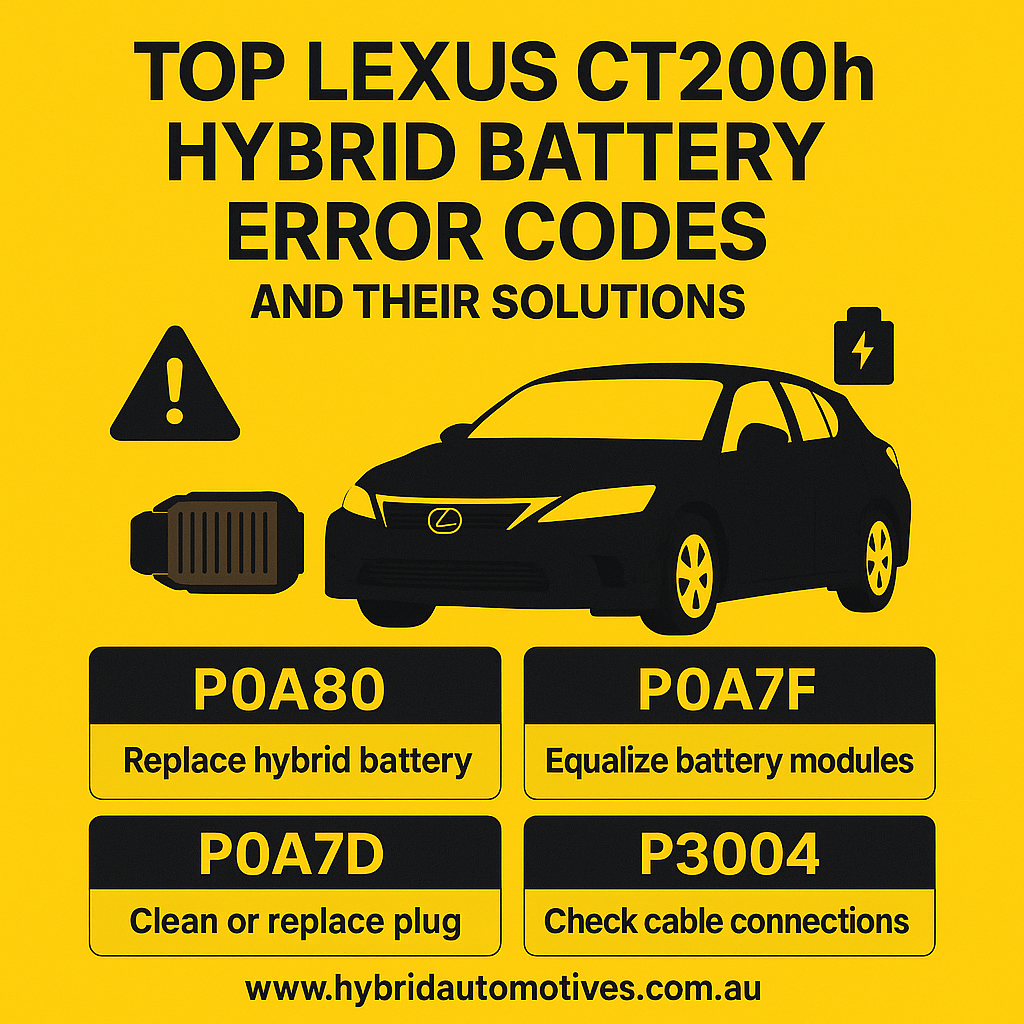
The Lexus CT200h is a reliable hybrid vehicle, blending efficiency with performance. However, like any sophisticated system, it may occasionally encounter issues, especially within its hybrid battery system. To help owners and technicians diagnose and address these problems, the CT200h uses Diagnostic Trouble Codes (DTCs). This article will explore the most common hybrid battery error codes and provide detailed solutions for each. Understanding Hybrid Battery Error Codes The Lexus CT200h’s hybrid battery system is equipped with numerous sensors and control modules that monitor its performance. When an issue arises, the system triggers specific error codes that can be read using a diagnostic scanner. These codes help pinpoint the exact problem, saving time and effort in troubleshooting. Common Lexus CT200h Hybrid Battery Error Codes P0A80: Replace Hybrid Battery Pack This code indicates that the hybrid battery pack’s performance has degraded below acceptable levels. It is one of the most common codes and usually means the battery has reached the end of its life. Symptoms: Reduced fuel economy Warning lights on the dashboard Noticeable decrease in power Solution: Replace the hybrid battery pack with a new or reconditioned unit. Ensure the replacement battery is compatible with the CT200h. Perform a system calibration after replacement. P0A0D: High Voltage System Interlock Circuit High This error occurs when there is an issue with the interlock circuit, which ensures safe operation of the high-voltage system. Symptoms: Vehicle fails to start “Check Hybrid System” warning on the dashboard Solution: Inspect the interlock circuit for loose or damaged connections. Verify that the high-voltage safety plug is properly installed. Reset the error code using a diagnostic tool after repairs. P0AC0: Hybrid/EV Battery Pack Current Sensor A Circuit Range/Performance This code points to a problem with the current sensor monitoring the hybrid battery pack. Symptoms: Inconsistent charging and discharging of the hybrid battery Decreased vehicle performance Solution: Inspect the battery pack’s current sensor for damage or misalignment. Replace the faulty sensor if needed. Clear the code and test the system to ensure proper function. P0AFC: Hybrid/EV Battery Pack Sensor Module Issue This error indicates a malfunction in the sensor module that monitors the battery’s voltage and temperature. Symptoms: Irregular battery performance Vehicle may enter limp mode to protect the system Solution: Check for loose or corroded connections in the sensor module. Replace the sensor module if it’s defective. Perform a full system reset to clear the error. P0B47: Hybrid/EV Battery Voltage Sense C Circuit Low This code signals that the voltage sensor in the hybrid battery pack is reading lower than expected. Symptoms: Diminished battery efficiency Potential overheating of the battery pack Solution: Inspect the voltage sensing wires for damage or disconnection. Replace the faulty sensor or repair the wiring. Clear the code and monitor the system for recurring issues. U029A: Lost Communication With Hybrid/EV Battery Pack Sensor Module This code appears when the system cannot communicate with the battery pack’s sensor module. Symptoms: Multiple warning lights on the dashboard Vehicle may not start or function properly Solution: Check the wiring and connectors between the battery pack and the ECU. Replace the sensor module if communication cannot be restored. Use a diagnostic scanner to reset the code after repairs. Preventative Maintenance Tips To minimize the risk of encountering these error codes, regular maintenance is crucial. Here are a few tips to keep your Lexus CT200h hybrid battery in top condition: Monitor Battery Performance: Pay attention to any warning signs, such as reduced fuel efficiency or sluggish performance. Perform Regular Inspections: Have a certified technician inspect the hybrid system at regular intervals. Maintain Proper Cooling: Ensure the battery cooling fan is clean and functioning correctly to prevent overheating. Use Quality Components: Always use OEM or high-quality aftermarket parts for repairs and replacements.
Hybrid Battery Cooling Maintenance
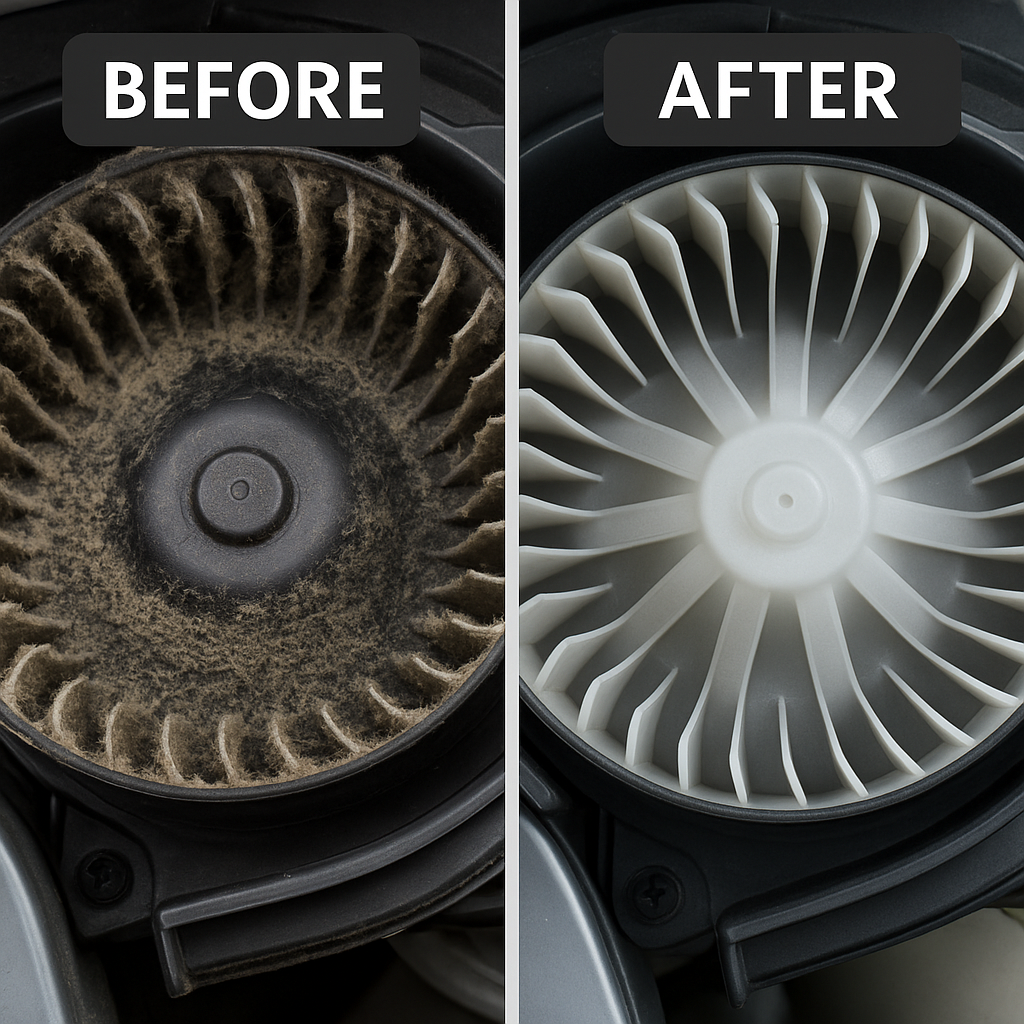
Toyota Prius, Camry, and Lexus models require proper maintenance of the Hybrid Battery Cooling System every 6 Months to ensure optimal performance and avoid costly issues. Neglecting this essential upkeep can lead to the accumulation of Dust and debris in the cooling system, significantly impairing the battery’s cooling efficiency. This may result in diagnostic trouble codes (DTC) such as P0A80 (Replace Hybrid Battery) or P0A7F (Indicating dust and debris-related issues). The Problem: Dust and Debris in Cooling Systems Over time, dust, lint, and other debris can accumulate in the air intake vents and cooling fans of hybrid vehicles. This issue is particularly common in vehicles frequently driven in dusty environments or those carrying pets, as fur and dirt can clog the system. When airflow is restricted, the hybrid battery cannot dissipate heat effectively, leading to overheating. A clear warning sign of this problem is the dashboard message: “Maintenance Required for Traction Battery Cooling Parts.” Ignoring this alert can exacerbate the issue, affecting the battery’s efficiency and longevity. Consequences of Ignoring the Issue Failing to address hybrid battery cooling system blockages can lead to significant and potentially hazardous consequences. Below are the detailed adverse effects with relevant diagnostic trouble codes (DTCs) and real-life automotive hazards: Reduced Battery Efficiency (DTC P0A7F – Hybrid Battery Pack Deterioration): A compromised cooling system causes the high-voltage (HV) battery to overheat, reducing its ability to charge and discharge efficiently. This inefficiency results in lower fuel economy, diminished electric motor performance, and an increased reliance on the internal combustion engine. Over time, this can degrade the hybrid system’s operational effectiveness, causing power surges or limp mode activation, especially during high-demand scenarios like steep inclines or rapid acceleration. Accelerated Battery Wear (DTC P0A80 – Replace Hybrid Battery): Persistent overheating accelerates the degradation of individual battery cells, leading to premature wear. The Vehicle’s onboard diagnostics may trigger DTC P0A80, showing the need to replace the entire hybrid battery pack. Continuous operation under such conditions can increase internal resistance within the cells, further straining the system and reducing the battery’s overall lifespan. Costly Repairs or Replacements: Neglected cooling systems not only degrade the battery but can also damage associated components such as the HV cooling fan and air intake ducts. A damaged cooling fan may result in DTC P0A94 (DC/DC Converter Performance Malfunction) or P0C73 (Drive Motor “A” Temperature Sensor Circuit Low), reflecting faults in temperature management. Repair costs for cooling fans, ductwork, or battery replacement can run into thousands of dollars, especially in vehicles no longer under warranty. Safety Hazards (Thermal Runaway Risk): Overheating batteries can lead to conditions where cell temperatures rise uncontrollably, risking thermal runaway—a potentially catastrophic failure that may result in smoke, fire, or explosion. DTCs such as P3000 (Battery Control System Malfunction) and P3190 (Poor Engine Power) may also manifest as the vehicle’s systems attempt to mitigate the overheating, further stressing the powertrain components. Real-Life Automotive Hazards: In real-world scenarios, a blocked cooling system can lead to mid-journey breakdowns, especially in high-temperature climates or during prolonged idling in traffic. Overheated batteries may shut down the hybrid system to prevent damage, leaving drivers stranded. Additionally, compromised cooling can affect auxiliary systems reliant on battery performance, such as regenerative braking and start-stop functionality, increasing wear on the braking system and fuel consumption. Technical Insight: Hybrid battery cooling systems are vital for dissipating heat generated during the high-voltage battery’s charge/discharge cycles. Regular maintenance, such as cleaning the air intake vents and replacing clogged filters, ensures consistent airflow and prevents overheating. Use of specialized diagnostic tools like Techstream can help monitor real-time battery temperatures and system performance, allowing for early detection and remediation of potential issues. To ensure the safety and longevity of your Toyota Prius, Camry, or Lexus hybrid, it’s essential to schedule routine inspections and address any DTCs promptly. The Solution: Professional Maintenance Servicesby Hybrid Automotive Service Regular maintenance of the Hybrid Battery Cooling system is vital to avoid these issues. At Hybrid Automotive Service, we specialize in professional cleaning and diagnostics to ensure your vehicle remains in top condition. Comprehensive Cleaning: Our technicians thoroughly clean the cooling fan, air intake vents, and ducts to remove all dust and debris. We use advanced tools and methods to ensure efficient cleaning without pushing debris deeper into the system. Filter Inspection and Replacement: Filters play a critical role in preventing debris from entering the cooling system. We inspect and replace filters as needed, especially for vehicles exposed to heavy use or dusty environments. System Diagnostics: Our experts perform detailed diagnostics to identify potential problems before they escalate. Warning codes are cleared, and test drives confirm that the system operates as intended. Why Choose Us? Expertise in Hybrid Vehicles: We specialize in Toyota and Lexus hybrids, offering tailored solutions for their unique needs. Cost-Effective Solutions: Preventative maintenance saves you money by reducing the risk of major repairs. Customer-Centric Service: Our transparent approach ensures you understand the services your vehicle requires.
Essential Tips for Charging Hybrid Car Batteries

Hybrid cars have become popular lately because they’re good for the environment and use less fuel. The important part of hybrid cars is their batteries. These batteries give power to the electric motor and help the regular engine work better. Properly charging hybrid car batteries is essential for maintaining their longevity and optimizing performance. We’ll explore some essential tips for charging hybrid car batteries effectively. Understanding Hybrid Car Batteries Hybrid car batteries can be of different types like nickel-metal hydride (NiMH) and lithium-ion (Li-ion). They store energy from the engine and when you brake, and then give power to the electric motor when it’s needed. It’s crucial to understand the type of battery your hybrid vehicle uses and how to properly maintain its health for optimal performance. Charging Basics Charging your hybrid car batteries is fundamental to ensuring optimal performance and extending their lifespan. Understanding the basics of charging is essential for efficient and effective battery management. Here are some key considerations: Charging Methods: Hybrid vehicles can be charged through two primary methods: plug-in charging and regenerative braking. Plug-in charging means plugging your car into a power source outside, like at home or a charging station in public. Regenerative braking is when your car captures energy when you slow down and turns it into electricity to charge the batteries. Charging Levels: Hybrid car batteries can be charged in different ways, from Level 1 to Level 3. Level 1: You use a regular home outlet, and it charges slowly. Level 2: You need a special charging station, and it charges faster. Level 3 (DC Fast Charging): It charges the quickest, but you need special equipment, usually found at public stations. Charging Time: The time it takes to fully charge hybrid car batteries depends on a few things, like how big the battery is, what kind of charging you’re using, and how strong the charging station is. Level 1 charging may take several hours to fully charge the batteries, while Level 2 charging can significantly reduce charging time. Level 3 charging offers the fastest charging speed, with some stations capable of providing an 80% charge in as little as 30 minutes. Charging Safety: It’s essential to prioritize safety when charging hybrid car batteries to prevent accidents and ensure personal well-being. Make sure to follow the guidelines and instructions from the manufacturer when charging your hybrid car. Use certified charging equipment and avoid using damaged or faulty charging cables. Do not attempt to modify or tamper with the charging system, and always unplug the charging cable before driving. Monitoring Charging Progress: Stay informed about the progress of your charging session by monitoring charging indicators on the vehicle dashboard or through smartphone apps. Some charging stations may also provide real-time monitoring and notifications to keep you updated on the status of your charging session. Regularly check the battery charge level to ensure that it aligns with your desired range and driving needs. Environmental Considerations: Be mindful of the environmental impact of charging your hybrid car batteries and strive to minimize energy consumption whenever possible. You can use solar or wind power to charge your car and lessen your need for fossil fuels. Practice energy-efficient driving habits to maximize the efficiency of your hybrid vehicle and minimize the need for frequent charging. Home Charging Tips Charging your hybrid car at home is easy and saves money. To optimize your home charging experience, consider the following tips: Install a Dedicated Charging Station: Invest in a dedicated charging station for your hybrid car. These stations are specifically designed to charge electric and hybrid vehicles Hiring a certified electrician to install the charging station ensures safety and compliance with electrical codes. Choose the Right Location: Select a suitable location for installing the charging station, preferably near where you park your vehicle. Make sure you have enough space and can reach an electrical outlet or breaker panel. Use a High-Powered Charging Station: Opt for a high-powered charging station to minimize charging time. Stations with higher power output can charge your hybrid car faster, reducing downtime and maximizing convenience. Consider Smart Charging Solutions: Look into smart charging options so you can watch and control charging from far away. Smart charging stations enable you to schedule charging sessions, track energy consumption, and receive notifications on your smartphone. Upgrade Electrical Wiring if Necessary: If your home’s electrical wiring is outdated or insufficient to support a charging station, consider upgrading it. Switching to a stronger electrical circuit can help you charge safely and without problems. Follow Manufacturer Guidelines: Follow the instructions from the manufacturer when charging your hybrid car at home. You can check the owner’s manual or reach out to the vehicle manufacturer for detailed charging instructions and safety tips. Use a Timer or Schedule Charging: Take advantage of built-in timers or scheduling features available on some charging stations. Program your charging for times when electricity costs less, saving you money. Keep Charging Cables Organized: Maintain a tidy and organized charging setup to prevent tripping hazards and prolong the lifespan of charging cables. Keep charging cables tidy and out of the way when you’re not using them. Monitor Charging Progress: Regularly check the status of your hybrid car’s charging progress to ensure it is charging properly. Most charging stations provide indicator lights or digital displays that indicate charging status and battery level. Safety First: Prioritize safety when charging your hybrid car at home. Make sure the charging station and electrical connections are in good shape and follow all safety rules from the manufacturer. If you notice any problems while charging, stop right away and get help from a professional. Public Charging Etiquette When using public charging stations, it’s essential to observe proper etiquette to ensure fairness and efficiency. Don’t stay at charging stations longer than you need to and move your car once it’s done charging. Be mindful of other drivers waiting to charge their vehicles and follow any posted time limits or regulations. Maximizing Battery Life To prolong the lifespan
Understanding the Role of ABS Pump in Car Brakes
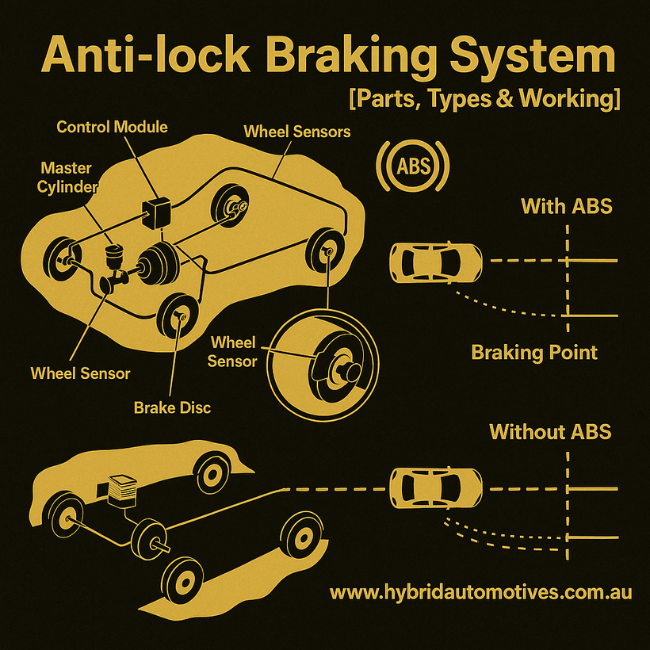
An ABS (Anti-lock Braking System) pump is an essential component of modern vehicles, contributing significantly to road safety. Explore ABS Pumps in detail, explaining how they work, what parts they have, their advantages, common problems, how to take care of them, and advancements in their technology. Introduction to ABS Pump In today’s automotive landscape, safety is paramount, and the ABS pump plays a crucial role in ensuring safe braking maneuvers. Essentially, an ABS pump is like a smart brake system. It has a hydraulic part and a control unit that work together to stop your wheels from locking up when you brake. This helps you keep control of your steering and grip on the road. Components of ABS Pump An ABS (Anti-lock Braking System) pump consists of several parts that work together to ensure effective braking in vehicles. These components include: Hydraulic Unit: The hydraulic unit of the ABS pump is responsible for regulating brake pressure during operation. It has valves and pistons inside that control the pressure of the brake fluid to stop the wheels from locking up. Electronic Control Unit (ECU): The ECU is like the ABS’s brain. It processes data from wheel speed sensors and controls the operation of the hydraulic unit to prevent skidding during braking. Wheel Speed Sensors: These sensors are placed on each wheel and keep track of how fast the wheels are spinning. The data collected by the wheel speed sensors helps the ECU determine if any wheels are at risk of locking up during braking. How ABS Pump Works ? The ABS pump works by checking how fast each wheel is moving all the time. If it notices one wheel is slowing down too much, it changes how hard the brakes press to stop it from locking up while you’re braking. Here’s an easy way to understand how it works: Detection of Wheel Speed: The ABS has sensors on each wheel that check how fast they’re spinning. These sensors send information to the ABS control module in real-time. Analysis by Control Module: The ABS control module keeps looking at the information it gets from the wheel sensors all the time. If it detects that one or more wheels are decelerating too rapidly, indicating a potential lock-up situation, it activates the ABS. Pressure Modulation: Upon activation, the ABS control module signals the ABS pump to modulate brake pressure. It does this by quickly pressing and releasing the brakes on the wheels that need it. Prevention of Wheel Lock-up: By adjusting the pressure of the brakes, the ABS pump stops the wheels from locking up. This helps the driver steer the car. This helps the vehicle to maintain traction and stability during braking, especially in slippery or emergencies. Monitoring and Adjustment: The ABS continuously monitors wheel speed and adjusts brake pressure as needed throughout the braking process. Once the ABS control module determines that the risk of wheel lock-up has been mitigated, it allows the brakes to function normally again. Benefits of ABS Pump The ABS (Anti-lock Braking System) pump offers several advantages that contribute to improved vehicle safety and performance. Here are the key benefits: Enhanced Vehicle Control: One big advantage of the ABS pump is that it helps you control your car better when you brake. It stops the wheels from locking up, so you can still steer even if you’re braking hard or driving on a slippery road. Reduced Braking Distance: ABS pumps help to reduce braking distance by preventing wheel skidding. By ensuring that the wheels continue to rotate during braking, the ABS system allows the vehicle to come to a stop more quickly, potentially reducing the risk of accidents. Prevention of Skidding and Loss of Control: Skidding can occur when one or more wheels lock up during braking, causing the vehicle to slide uncontrollably. The ABS pump prevents this by modulating brake pressure, thereby reducing the likelihood of skidding and loss of control. Improved Stability in Emergency Braking: During emergency braking maneuvers, the ABS pump helps to maintain stability and control by preventing wheel lock-up. This lets the driver turn the car away from things on the road while they’re braking, which makes crashes less likely. Better Performance in Adverse Conditions: ABS pumps are particularly beneficial in adverse driving conditions such as wet, icy, or gravelly roads. By preventing wheel lock-up, the ABS helps to maintain traction and stability, even when road conditions are challenging. Common Issues with ABS Pump While ABS (Anti-lock Braking System) pumps are designed to enhance vehicle safety, they can encounter various issues over time. Understanding these common issues is crucial for maintaining the functionality of the ABS. Here are some of the most frequent problems associated with ABS pumps: Sensor Malfunction: The ABS needs wheel speed sensors to work because they tell it how fast each wheel is spinning. Sensor malfunctions, such as dirt accumulation, corrosion, or wiring faults, can lead to inaccurate readings and trigger ABS warning lights. Pump Failure: The ABS pump itself can fail due to mechanical issues or electrical faults. Parts inside the ABS pump can get old and worn out, which can make it work less well or stop working altogether. Problems with the electrical system, like broken wires or bad relays, can also make the ABS pump stop working right. Electronic Faults: The electronic control unit (ECU) of the ABS may encounter faults or glitches, leading to erratic behavior or complete system failure. Issues with the ECU can arise due to software errors, voltage irregularities, or damage to electronic components. Fluid Contamination: Contaminated brake fluid can compromise the performance of the ABS pump and other hydraulic components. Moisture, air bubbles, or debris in the brake fluid can interfere with the operation of valves and pistons within the hydraulic unit, leading to reduced braking effectiveness. Brake Fluid Leaks: If there are holes in the hydraulic system, the brake fluid can leak out. This makes the hydraulic pressure lower and might make the ABS pump stop working. Common
Do Hybrid Cars Have Lithium Batteries?
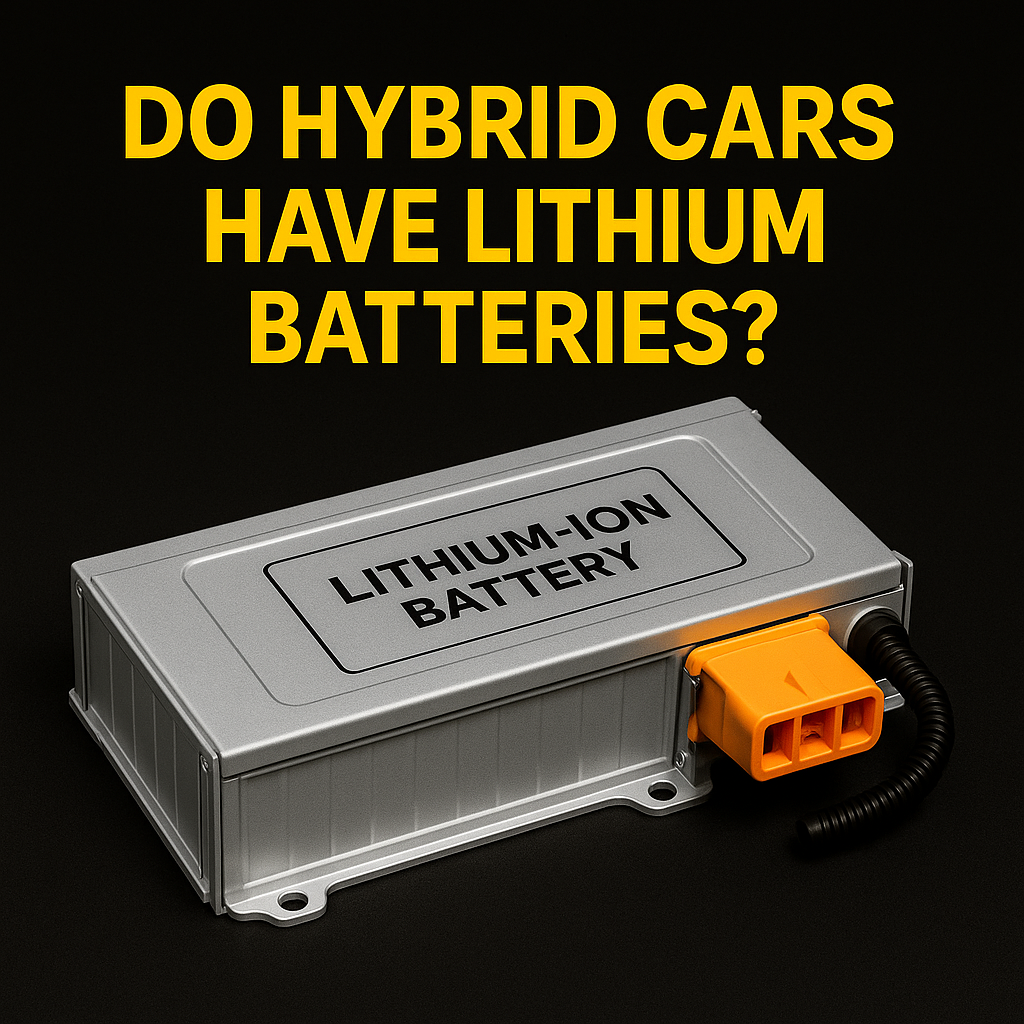
A hybrid vehicle offers fuel efficiency, reduced emissions, and a seamless driving experience, revolutionizing the automotive industry. However, a common question among hybrid owners and potential buyers is: Do hybrid cars have lithium batteries? In this case, the answer depends on the model and manufacturer. In some hybrids, lithium-ion batteries (Li-ion) are used, while in others, nickel-metal hydride (NiMH) batteries are used. At Hybrid Automotive Service, we specialize in servicing and replacing hybrid batteries, ensuring that your vehicle runs efficiently—whether it uses NiMH or Li-ion technology. Understanding Hybrid Battery Types 1. Nickel-Metal Hydride (NiMH) Batteries Used in: Older hybrid models and some current Toyota and Honda hybrids. Proven reliability: NiMH batteries have been used in hybrid vehicles for decades and have a strong track record. Durability: These batteries are long-lasting and resistant to extreme temperature changes. Lower cost: Compared to lithium-ion, NiMH batteries are generally cheaper to manufacture. Heavier and less efficient: NiMH batteries weigh more and store less energy than their lithium-ion counterparts, affecting overall vehicle performance. 2. Lithium-ion (Li-ion) Batteries Used in: Most modern hybrid vehicles, plug-in hybrids (PHEVs), and electric vehicles (EVs). Higher energy density: Fuel efficiency is improved by using lithium-ion batteries, which are smaller, lighter, and store more power. Faster charging and discharging: Li-ion batteries support better regenerative braking and overall hybrid performance. Longer lifespan: With advanced thermal management, these batteries tend to have a longer operational life. Higher cost: While lithium-ion technology is more efficient, it is also more expensive to produce than NiMH. Do All Hybrid Cars Have Lithium-Ion Batteries? Not all hybrid vehicles use lithium-ion batteries. Some manufacturers still equip their hybrids with NiMH packs due to their affordability and reliability. Here’s a breakdown of some popular hybrid models and their battery types: Toyota Prius (Older Models) NiMH Toyota Prius (Newer Models) Li-ion NiMH Toyota Camry Hybrid Li-ion Lexus RX 450h NiMH Li-ion Honda Insight Li-ion Hyundai Ioniq Hybrid Li-ion Ford Escape Hybrid Li-ion Many automakers offer both battery types in different trims or markets, depending on cost and regulatory requirements. However, the performance of lithium-ion batteries is rapidly making them the industry standard. Why Are Automakers Switching to Lithium-Ion? The shift toward lithium-ion batteries is driven by several factors: ✅ Better Efficiency – Lighter weight and improved energy density contribute to better fuel economy. ✅ Faster Charging – Li-ion batteries allow quicker energy recovery during regenerative braking. ✅ More Power – Higher output enhances acceleration and electric-only driving capabilities. ✅ Reduced Environmental Impact – Li-ion batteries are more recyclable and require fewer raw materials compared to NiMH. Despite these advantages, NiMH batteries are still widely used due to their proven reliability and cost-effectiveness. Hybrid Battery Maintenance & Replacement Regardless of your hybrid’s battery type, regular maintenance is essential for optimal performance. At Hybrid Automotive Service, we provide: 🔹 Hybrid Battery Diagnostics – Identifying early signs of battery degradation. 🔹 Battery Conditioning & Reconditioning – Restoring capacity in aging battery packs. 🔹 Hybrid Battery Replacement – Offering high-quality NiMH and Li-ion replacements. 🔹 Customized Battery Solutions – Upgrading older hybrids with lithium-ion technology (where compatible). If your hybrid’s battery is underperforming, we can help determine whether reconditioning or replacement is the best option for your vehicle. Which Battery is Better? Both NiMH and lithium-ion batteries have their advantages. While lithium-ion is the future of hybrid technology, NiMH remains a trusted, budget-friendly option in certain hybrid models. Whether your hybrid runs on NiMH or Li-ion, Hybrid Automotive Service is your trusted expert in battery diagnostics, maintenance, and replacement. Our skilled technicians ensure that your hybrid battery delivers peak performance, keeping your vehicle running efficiently for years to come. Need hybrid battery assistance? Contact Hybrid Automotive Service today!