
Check Hybrid System Warning in Lexus RX 400h
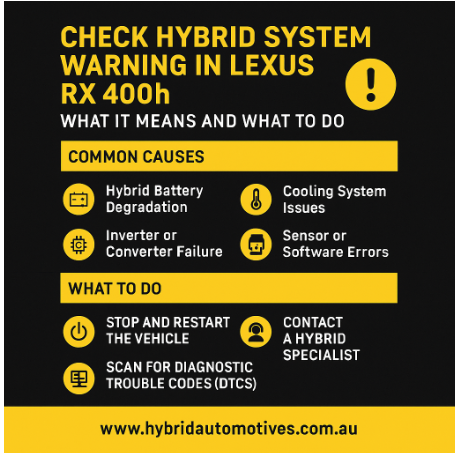
If you’re driving a Lexus RX 400h and suddenly see the warning message “Check Hybrid System,” it’s important to understand what this means and how to respond. This warning can indicate a range of issues from minor sensor glitches to serious battery or inverter problems. Acting quickly can help prevent further damage and costly repairs. At Hybrid Automotive Service, we specialize in diagnosing and fixing hybrid system issues, ensuring your Lexus stays safe and efficient. What Does “Check Hybrid System” Mean in a Lexus RX 400h? The “Check Hybrid System” warning is a general alert from your vehicle’s onboard computer, indicating a malfunction in one or more hybrid components. These systems include the high-voltage battery, inverter/converter, electric motor, and various sensors. When a fault is detected, the vehicle triggers the warning to protect the system and alert the driver. Common Causes of the Warning 1. Hybrid Battery Degradation Over time, the hybrid battery can lose its efficiency and capacity. This is one of the most common reasons for the warning, especially in older RX 400h models. 2. Inverter or Converter Failure The inverter plays a critical role in converting power between the electric motor and battery. A failure in this component can disrupt the entire hybrid system. 3. Cooling System Issues Hybrid components such as the battery and inverter need proper cooling. If the cooling fan or fluid is malfunctioning, it can trigger the warning. 4. Sensor or Software Errors Sometimes, faulty sensors or outdated software can miscommunicate with the system’s ECU, leading to a false warning. What to Do When You See the Warning Step 1 – Stop and Restart the Vehicle Sometimes, a simple reset by turning the vehicle off and back on can clear minor glitches. However, this is only a temporary solution. Step 2 – Scan for Diagnostic Trouble Codes (DTCs) Using a hybrid-specific diagnostic scanner can reveal the exact issue. These tools read fault codes from the hybrid control module. Step 3 – Contact a Hybrid Specialist Not all general mechanics are equipped to handle hybrid diagnostics. At Hybrid Automotive Service, we use advanced tools and expertise to pinpoint and fix hybrid system faults. Repair vs Replacement – What Are Your Options? Depending on the fault, you may need minor repairs (like replacing a cooling fan or sensor) or major components such as the hybrid battery. Our workshop offers multiple battery replacement options: OEM Batteries from Toyota Rebuilt Hybrid Batteries Brand New Aftermarket Batteries All come with a 3-year or 100,000 KM warranty. Prevention Tips to Avoid the Warning Schedule regular hybrid system inspections. Monitor and maintain inverter coolant levels. Avoid over-draining the hybrid battery. Get software updates during service intervals. Why Choose Hybrid Automotive Service? Over 25 years of experience with Lexus hybrid systems Fast same-day service in Sydney and nearby suburbs Affordable pricing with multiple battery options Professional diagnosis and genuine customer support
Check Hybrid System Warning in Lexus CT200h: What It Means and How to Fix It
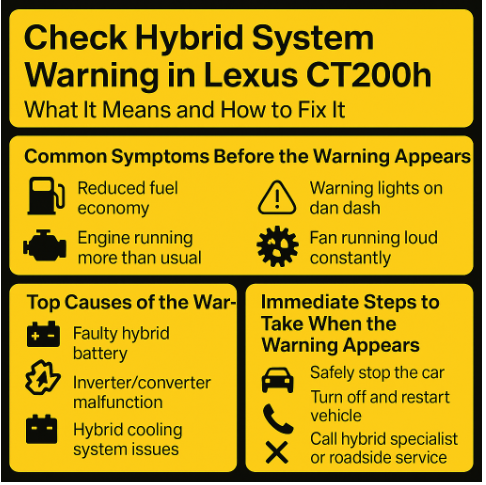
The “Check Hybrid System” warning in your Lexus CT200h can be alarming, especially if you’re not sure what triggered it. This warning is a signal from your car’s onboard diagnostics system, indicating that something is wrong within the hybrid drivetrain. Ignoring it can lead to reduced performance or even system failure, so it’s crucial to understand the cause and act quickly. What Is the “Check Hybrid System” Warning in Lexus CT200h? This warning typically appears on your dashboard when your hybrid system detects a malfunction. It could involve the Lexus CT200H Hybrid Battery, inverter, cooling system, or related sensors. The CT200h relies on a combination of an internal combustion engine and an electric motor, so any disruption can affect fuel efficiency and vehicle performance. Common Symptoms Before the Warning Appears Before the warning message shows up, you might notice: A drop in fuel efficiency The engine running more frequently, even at low speeds The hybrid cooling fan running loudly or constantly Sluggish acceleration Other dashboard lights like the red triangle or check engine light These are early signs that your hybrid system may be under stress. Top Causes of the Warning Here are the most common reasons the warning appears: 🔋 1. Hybrid Battery Failure The most frequent cause. Over time, hybrid batteries degrade, and when module voltage imbalances occur, the system triggers a warning. ⚡ 2. Inverter/Converter Malfunction The inverter converts DC from the battery to AC for the electric motor. A failure here can severely impact the system. ❄️ 3. Cooling System Problems Overheating in the hybrid battery due to a clogged fan or blocked vent can cause the system to shut down as a protective measure. 📉 4. Sensor or ECU Issues Faulty sensors or software glitches can throw error codes that lead to false warnings. 🔋 5. 12V Auxiliary Battery Issues A weak or dead 12V battery can trigger hybrid system faults due to voltage drops. Immediate Steps to Take When the Warning Appears If the “Check Hybrid System” message appears: Safely pull over and stop the car. Turn off the engine and restart after a minute to see if the warning clears. Do not continue driving if the warning persists. Call a hybrid specialist or roadside assistance immediately. Attempting to drive long distances can cause further damage or a breakdown. Diagnostic Process Explained To identify the exact issue, professionals use advanced OBD-II diagnostic tools. They’ll check for hybrid system fault codes such as: P0A80 – Replace Hybrid Battery P0A7F – Battery Pack Deterioration P3000 – HV Battery Control System Error A proper diagnosis includes checking module voltages, inverter status, and fan operations. Repair and Replacement Options ✅ Battery Repair vs. Replacement Some hybrid specialists offer module balancing or reconditioning if only one part is failing. However, for long-term reliability, a full replacement is often recommended. ✅ OEM, Aftermarket & Rebuilt Options OEM batteries from Toyota offer the longest life but come at a higher price. Rebuilt batteries are a budget-friendly option with moderate warranty coverage. Aftermarket batteries balance cost and performance, especially when installed by a trusted provider. Average Costs in Australia Battery Replacement: $1,800–$3,200 Inverter Repair: $1,200–$2,000 Fan Cleaning or ECU Update: $150–$500 ⏱️ Repair Time Most hybrid battery replacements are completed the same day by experienced workshops. Preventive Maintenance Tips To reduce the risk of hybrid system warnings: Inspect hybrid battery health every 6–12 months Clean cooling fan and battery vent Check inverter coolant levels regularly Update ECU software at recommended service intervals Regular hybrid-specific service can significantly extend battery life. Why Choose Hybrid Automotive Service At Hybrid Automotive Service, we specialize in diagnosing and repairing Lexus CT200h hybrid issues. Our workshop in Belmore, NSW offers: Expert hybrid diagnostics OEM, rebuilt, and aftermarket battery replacements 3-year or 100,000 KM warranty Fast, same-day service We’ve helped hundreds of Lexus owners restore their hybrid systems affordably and reliably.
Check Hybrid System – Stop the Vehicle in a Safe Place: What It Really Means
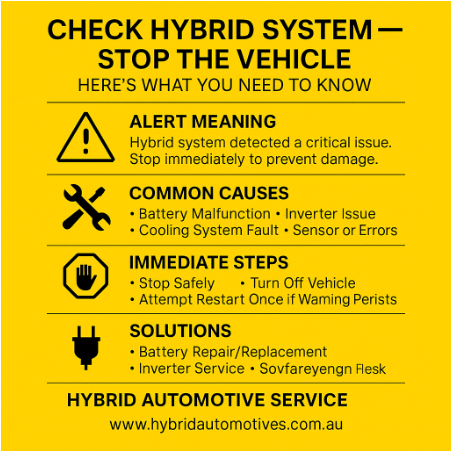
If you see the “Check Hybrid System – Stop the Vehicle in a Safe Place” warning, it indicates a significant issue with your hybrid car’s system, often related to the battery or other essential components. Ignoring this warning could lead to severe vehicle damage, expensive repairs, or even dangerous situations on the road. Understanding the “Check Hybrid System – Stop the Vehicle” Warning This alert means the car’s hybrid system has detected a malfunction requiring immediate attention. The vehicle advises stopping safely because continuing to drive could compromise your safety and the integrity of your hybrid system. Common Causes of the ‘Check Hybrid System’ Alert Hybrid battery failure or malfunction: Deteriorated cells or a battery approaching its end-of-life. Issues with the inverter/converter: Essential components for battery charging and electricity flow. Overheating of hybrid components: Often due to poor coolant circulation. Cooling system issues: Damaged pumps or clogged cooling lines. Software or sensor faults: Errors that trigger warnings unnecessarily. Immediate Steps to Take When You See This Warning Pull over safely: Find the nearest safe spot to park your vehicle. Turn off the vehicle: Shut down your car completely and wait for a few minutes. Attempt restart cautiously: After waiting, cautiously restart the vehicle once. If the warning persists, stop again immediately. Call roadside assistance: If unable to safely restart, call professional roadside assistance to avoid further damage. Diagnosing the Issue OBD-II scanner: Initial diagnosis can be done by connecting an OBD-II scanner to read the specific error codes. Professional diagnostic: Visiting specialists like Hybrid Automotive Service ensures an accurate diagnosis and effective solutions. Common Error Codes Associated with ‘Check Hybrid System’ Warning P0A80: Indicates a need for hybrid battery replacement. P3013, P3014, P3015: Specific battery cell issues that require attention. P0A93: Reflects problems with the inverter cooling system. Solutions and Repairs for Hybrid System Issues Hybrid battery repair/replacement: Options include OEM, rebuilt, or aftermarket batteries tailored to different budgets and needs. Inverter/converter repair: Ensures electricity is effectively regulated between battery and motor. Cooling system maintenance: Prevents overheating by regularly checking coolant levels and replacing worn parts. Software updates and sensor replacements: Corrects false alarms and ensures proper functioning. Preventing Future Hybrid System Alerts Regular hybrid system check-ups: Frequent professional inspections detect issues before they escalate. Routine hybrid battery maintenance: Prolong battery lifespan with periodic conditioning and diagnostics. Monitor warning signs: Watch for decreased fuel efficiency, unusual noises, or slower performance. Follow recommended service schedule: Stick to manufacturer guidelines for servicing intervals. Why Choose Hybrid Automotive Service? Experienced hybrid technicians: Specialized knowledge and training in hybrid vehicle systems. Comprehensive battery options: Choose from OEM, rebuilt, or aftermarket hybrid batteries. Same-day replacement service: Minimal downtime, getting you back on the road quickly. Reliable warranty: Protection and peace of mind after service completion.
Check Hybrid System Warning – What It Means & How We Fix It
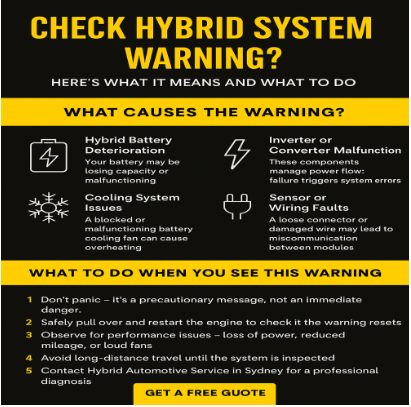
Seeing the “Check Hybrid System” warning on your Toyota or Lexus dashboard? This usually indicates an issue with the hybrid battery, inverter, or other critical components. While it might seem alarming, it’s a system alert designed to protect your vehicle — and our hybrid experts in Sydney are here to help you fix it fast and affordably. What Causes the “Check Hybrid System” Warning? This warning typically points to a fault in the hybrid drive system. Here are the most common causes: 🔋 Hybrid Battery Deterioration Your battery may be losing capacity or malfunctioning. ⚡ Inverter or Converter Malfunction These components manage power flow; failure triggers system errors. ❄️ Cooling System Issues A blocked or malfunctioning battery cooling fan can cause overheating. 🔌 Sensor or Wiring Faults A loose connector or damaged wire may lead to miscommunication between modules. 💻 ECU/Software Errors Corrupted software or firmware updates may generate false warnings. What To Do When You See This Warning Don’t panic – it’s a precautionary message, not an immediate danger. Safely pull over and restart the engine to check if the warning resets. Observe performance issues – loss of power, reduced mileage, or loud fans. Avoid long-distance travel until the system is inspected. Contact Hybrid Automotive Service for a professional diagnosis. Can You Drive with the “Check Hybrid System” Light On? You can technically drive for a short distance, but it’s not recommended. Continuing to drive may: Cause further damage to battery or electrical systems Trigger limp mode or complete system failure Invalidate your warranty (if applicable) How We Diagnose the Hybrid System in Sydney At Hybrid Automotive Service, we use OEM-grade tools and certified diagnostics to pinpoint the problem: ✅ OBD2 Scan for exact fault codes ✅ Live data monitoring ✅ Battery health check (voltage, resistance, balance) ✅ Visual inspection of wiring, sensors & cooling systems How Much Does It Cost to Fix the Warning? Cost depends on the root cause — here’s an estimate: Minor wiring or reset: $99 – $150 Cooling system service: $150 – $300 Hybrid battery reconditioning or replacement: $1,200 – $3,800 📍 Get a Free Diagnosis Quote – call us or book online. Why Choose Hybrid Automotive Service? 🛠️ Toyota & Lexus Hybrid Specialists 🚗 Mobile Service Available in Sydney & Surrounds 🔋 OEM, Rebuilt & Aftermarket Battery Options 🛡️ 3-Year / 100,000 KM Warranty 🕒 Same-Day Diagnosis in Most Cases FAQs About “Check Hybrid System” Q1: Can I reset the warning light myself? Yes, but it’s not recommended. You’ll need an OBD2 tool. Resetting without fixing the issue can hide a serious problem. Q2: Is it always the battery? Not always. It can be sensors, cooling fans, wiring, or inverter faults. Q3: Can you come to my location? Yes! We provide Mobile Diagnosis and Repair Service, Across Sydney. Q4: How long does it take to fix? Diagnosis takes 30–60 minutes. Repairs may range from 1 hour to 1 day based on parts and issue type.
What Does a Hybrid System Malfunction Mean?
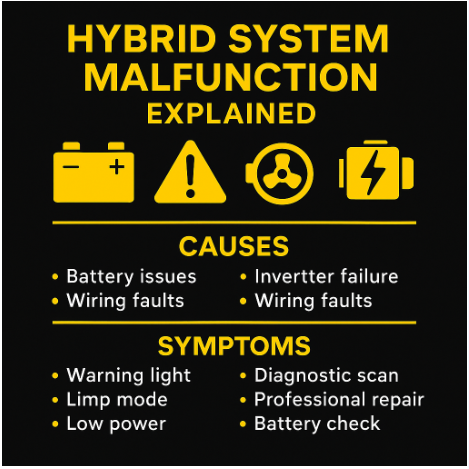
Hybrid vehicles, combining internal combustion engines with electric propulsion systems, offer improved fuel efficiency and reduced emissions. However, when a “Hybrid System Malfunction” warning appears, it signals that the vehicle’s hybrid components are not operating correctly. Understanding this warning is crucial for maintaining your vehicle’s performance and safety. Understanding the Hybrid System Malfunction Warning The “Hybrid System Malfunction” warning light indicates that the vehicle’s onboard diagnostics have detected an issue within the hybrid system. This system encompasses components such as: High-voltage battery pack Electric motor(s) Inverter/converter units Hybrid control modules Associated wiring and sensors When a fault is detected in any of these components, the system triggers the warning light to alert the driver of potential issues that may affect the vehicle’s performance or safety. Common Causes of Hybrid System Malfunctions Several factors can lead to a hybrid system malfunction: Battery Degradation: Over time, the high-voltage battery may lose its ability to hold a charge, leading to reduced performance or system errors. Inverter/Converter Failure: These components manage the flow of electricity between the battery and electric motor. Malfunctions can disrupt power delivery. Sensor Issues: Faulty sensors can send incorrect data to the control modules, causing the system to misbehave. Wiring Problems: Damaged or corroded wiring can interrupt communication between hybrid components. Cooling System Failures: Hybrid systems generate heat; if the cooling system fails, it can lead to overheating and component damage. Symptoms Accompanying the Warning When the hybrid system malfunction warning is active, you may notice: Reduced Fuel Efficiency: The vehicle may rely more on the gasoline engine, decreasing overall efficiency. Limited Power Output: The car might enter a “limp mode,” restricting speed and acceleration to prevent further damage. Unusual Noises: Whining or grinding sounds may emanate from the electric motor or inverter. Difficulty Starting: The vehicle may struggle to start or fail to start altogether. Immediate Actions to Take If the hybrid system malfunction warning appears: Safely Pull Over: If driving, find a safe location to stop the vehicle. Restart the Vehicle: Sometimes, restarting can reset the system. However, if the warning persists, further action is needed. Avoid Driving: Continuing to drive may cause additional damage. It’s advisable to have the vehicle inspected promptly. Consult a Professional: Schedule a diagnostic check with a qualified technician experienced in hybrid systems. Diagnostic and Repair Process Diagnosing a hybrid system malfunction involves: Computer Diagnostics: Using specialized tools to read error codes and identify faulty components. Physical Inspection: Checking wiring, connectors, and components for visible damage or wear. Performance Testing: Assessing the functionality of the battery, inverter, and motor under various conditions. Repairs may range from software updates to component replacements. Costs can vary significantly based on the issue’s complexity and the parts involved. Contact Hybrid Automotive Service to Fix Hybrid System Malfunction Error. Preventative Measures To minimize the risk of hybrid system malfunctions: Regular Maintenance: Follow the manufacturer’s recommended service schedule. Monitor Battery Health: Keep an eye on battery performance and address issues promptly. Protect Electrical Components: Ensure that the vehicle’s electrical systems are shielded from moisture and contaminants. Stay Informed: Keep up-to-date with recalls or service bulletins related to your vehicle’s hybrid system.
How Long Do Hybrid Batteries Last?
Hybrid vehicles are gaining popularity for their impressive fuel efficiency and environmental benefits. A common question among hybrid car owners is, “How long do hybrid batteries last?” Knowing how long your hybrid battery is likely to last helps you prepare for maintenance and replacement expenses. At Hybrid Automotive Service, we specialize in hybrid battery replacement, ensuring your vehicle stays in top condition. Understanding Hybrid Batteries Hybrid vehicles operate using a combination of an internal combustion engine and an electric motor driven by a battery. The hybrid battery plays a crucial role in delivering optimal performance and fuel efficiency. Types of Hybrid Batteries Nickel-Metal Hydride (NiMH): Commonly used in older hybrid models. Lithium-Ion (Li-Ion): Lighter and more efficient, used in newer models. How Long Do Hybrid Batteries Last? The lifespan of a hybrid battery depends on various factors, including the vehicle model, driving habits, and maintenance. Generally: Manufacturer’s Estimate: Most hybrid batteries are designed to last 8-10 years or approximately 100,000 to 150,000 miles. Real-World Performance: Some hybrid batteries can last longer, with proper care reaching up to 200,000 miles or more. Factors Affecting Hybrid Battery Life 1. Driving Habits Aggressive driving, frequent braking, and extreme acceleration can reduce the lifespan of your hybrid battery. 2. Climate Conditions Hot Climates: Excessive heat can degrade battery performance over time. Cold Climates: Extremely cold temperatures can affect battery efficiency temporarily. 3. Maintenance Regular servicing and timely replacement of components prolong battery life. Services like battery reconditioning, offered by Hybrid Automotive Service, can enhance battery performance. 4. Quality of Battery OEM Batteries: Original Equipment Manufacturer batteries tend to have a longer lifespan. Aftermarket or Rebuilt Batteries: These are cost-effective options with varying lifespans depending on quality. Signs Your Hybrid Battery May Need Replacement Reduced Fuel Efficiency: If your vehicle uses more fuel than usual, it may indicate battery issues. Dashboard Warning Lights: Specific hybrid system or battery warnings. Unusual Noises: Clicking or humming sounds from the battery area. Inconsistent Performance: Difficulty in maintaining power during acceleration. How Can Hybrid Automotive Service Help? At Hybrid Automotive Service, we specialize in hybrid battery replacement for Lexus and Toyota vehicles. Our Services Include: Battery Options: OEM, Aftermarket, and Rebuilt Batteries. Warranty: All batteries come with a 3-Year/100,000KM Warranty. Expert Technicians: Skilled in diagnosing and replacing hybrid batteries. Fast and Reliable Service: Ensuring minimal downtime for your vehicle. Tips to Prolong Hybrid Battery Life Drive Efficiently: Avoid harsh acceleration and braking. Park in Shaded Areas: Protect your battery from extreme temperatures. Regular Maintenance: Schedule check-ups with professionals like Hybrid Automotive Service. Battery Reconditioning: Opt for periodic reconditioning to enhance battery life.
Check Hybrid System Toyota Camry 2010

The Toyota Camry 2010 is renowned for its reliable performance and fuel efficiency, owing to its hybrid technology. However, like any complex system, the hybrid system in the Camry 2010 may encounter issues over time. One such issue is the dreaded “Check Hybrid System” warning, which can be concerning for drivers. We’ll delve into what this warning means, the common causes behind it, diagnostic steps, possible solutions, and preventive maintenance tips to keep your Camry 2010 running smoothly. Understanding the Check Hybrid System Warning: The “Check Hybrid System” warning is an indication from your Camry 2010’s onboard diagnostics system that there’s a problem with the hybrid system. It could signify various issues, ranging from minor sensor malfunctions to more serious battery or component failures. Not paying attention to this warning could make things worse and might make your car not work as well or be as safe. Common Issues with Camry 2010 Hybrid System: Several factors can trigger the “Check Hybrid System” warning in your Camry 2010: Battery Degradation: Over time, the hybrid battery in your Camry 2010 may degrade, leading to decreased performance and triggering the warning. System Malfunctions: Faulty components or wiring within the hybrid system can cause the warning to appear. Sensor Issues: Malfunctioning sensors responsible for monitoring various aspects of the hybrid system can also trigger false warnings. Diagnostic Steps: If you encounter the “Check Hybrid System” warning in your Camry 2010, follow these diagnostic steps: Scan for Diagnostic Codes: Use a special scanner to see the codes stored in your car’s computer. Interpret Diagnostic Codes: Refer to the vehicle’s service manual or seek assistance from a professional to interpret the codes accurately. Visual Inspection: Conduct a visual inspection of the hybrid system components, checking for any visible signs of damage or wear. Functional Tests: Perform functional tests on relevant components to identify any operational issues. Possible Solutions: Once you’ve identified the root cause of the “Check Hybrid System” warning, consider the following solutions: Battery Replacement or Reconditioning: If the “Check Hybrid System” warning is triggered by battery degradation, consider replacing the hybrid battery with a new one or exploring reconditioning options. Reconditioning involves restoring the battery’s performance through techniques like balancing the cells or replacing individual modules, which can be a cost-effective alternative to a full replacement. Component Repair or Replacement: Address any identified faulty components within the hybrid system. This may involve repairing damaged wiring, replacing malfunctioning sensors, or fixing issues with the inverter, motor, or other essential components. Consult with a qualified technician or mechanic experienced in hybrid systems to ensure accurate diagnosis and effective repairs. Diagnostic Software Updates: In some cases, updating the vehicle’s diagnostic software may resolve compatibility issues or bugs causing the “Check Hybrid System” warning. Manufacturers like Toyota periodically release software updates to improve system functionality and address known issues. Visit an authorized dealership or service center to inquire about available updates for your Camry 2010. System Reset: Performing a system reset can sometimes clear false warning messages and restore normal operation. This process typically involves disconnecting the vehicle’s battery for a few minutes to reset the onboard computer systems. However, proceed with caution and consult the vehicle’s manual or seek professional guidance to ensure proper procedure and avoid unintended consequences. Preventive Maintenance Tips: To minimize the risk of encountering the “Check Hybrid System” warning in your Camry 2010, follow these preventive maintenance tips: Routine Hybrid System Inspections: Incorporate regular hybrid system inspections into your maintenance schedule. During these checks, experts can look carefully at important parts, find possible issues early, and suggest fixing or changing things before they become big problems. Battery Health Monitoring: Utilize diagnostic tools or seek professional assistance to monitor the health of your Camry 2010’s hybrid battery regularly. Battery health checks can provide valuable insights into the battery’s condition, including capacity, voltage levels, and overall performance. Addressing any signs of degradation promptly can help prevent unexpected failures and prolong the battery’s lifespan. Fluid Checks and Replenishment: Ensure proper maintenance of essential fluids, such as coolant and transmission fluid, that play a crucial role in the hybrid system’s operation. Check the levels and quality of fluids often, and add more or change them if necessary to keep everything working well and avoid problems with the parts of the system. Eco-Friendly Driving Habits: Drive in a way that’s kind to the environment to ease pressure on the hybrid system and save fuel. Avoid speeding up and slowing down too fast, try to keep a steady speed, and use braking that captures energy when you slow down. These practices not only promote fuel savings but also contribute to the overall health and longevity of the hybrid system. Professional Maintenance Services: Entrust hybrid system maintenance and repairs to qualified technicians or mechanics with expertise in hybrid technology. Authorized dealerships or certified service centers equipped with specialized tools and diagnostic equipment can provide comprehensive servicing tailored to your Camry 2010’s hybrid system needs, ensuring peace of mind and optimal performance for years to come. FAQs (Frequently Ask Questions) Q1. Is it safe to continue driving if the “Check Hybrid System” warning appears in my Camry 2010? It’s not a good idea to keep driving if the “Check Hybrid System” light is on. Continuing to drive the vehicle with this warning could potentially lead to further damage to the hybrid system and compromise safety. Q2. Is it safe to continue driving if the “Check Hybrid System” warning appears in my Camry 2010? No, it’s not advisable to continue driving with the “Check Hybrid System” warning illuminated. Doing so could worsen any underlying issues and jeopardize both the vehicle’s performance and safety. Q3. How expensive is it to get a new hybrid battery for a 2010 Camry? The cost of replacing the hybrid battery in a Camry 2010 can vary depending on factors such as the brand of the battery, whether it’s a new or reconditioned unit and labor charges. Q4. Can I reset the “Check Hybrid System” warning myself?
Navigate Your 2007 Toyota Camry Check Hybrid System

The 2007 Toyota Camry Hybrid marked a significant milestone in the evolution of hybrid vehicles, blending the renowned reliability of the Camry with cutting-edge hybrid technology. This model showed Toyota’s dedication to being eco-friendly and creative. It gave drivers a car that uses less fuel and is better for the environment compared to regular gas-powered cars. Understanding the “Check Hybrid System” Warning: The “Check Hybrid System” warning serves as a crucial indicator of potential issues within the advanced hybrid system of the 2007 Toyota Camry Hybrid. This warning message alerts drivers to underlying problems that require prompt attention to ensure the continued reliability and performance of the vehicle. Common Symptoms Associated with the Warning: When the “Check Hybrid System” warning appears in a 2007 Toyota Camry Hybrid, several common symptoms may accompany it: Dashboard Indicators: Specific dashboard lights, such as the battery symbol or an exclamation mark within a triangle, may illuminate. Performance Changes: Drivers may notice reduced fuel efficiency or power output, affecting the overall driving experience. Unusual Sounds or Sensations: Odd noises like whining or grinding, or unusual vibrations, may occur while driving. Inconsistent Power Delivery: Drivers may experience irregular power delivery, such as sudden surges or delays in acceleration. Reduced Hybrid Mode Operation: The vehicle may struggle to switch between hybrid and gasoline modes efficiently, impacting overall fuel economy. Increased Engine Noise: Drivers may notice louder engine noises or unusual engine vibrations, signaling potential issues with hybrid system components. Diagnostic Trouble Codes (DTCs) Associated with Toyota Camry Hybrid “Check Hybrid System” Warning When diagnosing issues with the Toyota Camry Hybrid’s hybrid system, various Diagnostic Trouble Codes (DTCs) may appear, providing insights into potential faults. Here are some common DTCs associated with the “Check Hybrid System” warning and their corresponding details: P0A80 – Indicates hybrid battery deterioration. P0A82 – Indicates hybrid battery deterioration. P0A7D – Indicates hybrid powertrain control module malfunction. P0A94 – Indicates inverter cooling system performance issue. P0A9B – Indicates inverter component failure. P0A7F – Indicates hybrid system performance issue. P0A93 – Indicates inverter circuit malfunction. P0A92 – Indicates hybrid system performance issue. P0A95 – Indicates inverter cooling system performance issue. P0A96 – Indicates inverter cooling system performance issue. Diagnostic Steps for Resolving the Issue: To address the “Check Hybrid System” warning, drivers can follow these diagnostic steps: Initial Checks: Perform visual inspections to identify visible damage or abnormalities in the hybrid system components. Professional Assistance: Seek help from a certified Toyota technician or dealership for thorough diagnosis and repair. Onboard Diagnostics Scan: Use a tool called an OBD-II scanner to find out what’s wrong with your car by checking for codes stored in its computer system. Component Testing: Perform tests on specific hybrid system components, such as the battery, inverter, and motor, to identify faulty parts. Functional Tests: Conduct functional tests to assess the overall performance of the hybrid system, including powertrain and drivetrain operations. Possible Causes of the Warning: Several factors may trigger the “Check Hybrid System” warning in a 2007 Toyota Camry Hybrid: Battery Issues: Battery degradation or malfunction can disrupt the hybrid system’s operation. Electrical System Malfunctions: Inverter or electrical system issues, including overheating or component failure, may prompt the warning. Sensor Failures: Malfunctioning sensors or other component issues within the hybrid system can also contribute to the warning message. Software Glitches: Software bugs or compatibility issues within the vehicle’s onboard computer system may trigger false “Check Hybrid System” warnings. Environmental Factors: Very hot or very cold weather, or getting wet, can make the parts of the hybrid system not work well, which might cause warning lights to come on. Wear and Tear: Normal wear and tear over time can cause degradation of hybrid system components, resulting in warning messages as they approach the end of their lifespan. Steps to Take After Seeing the Warning: In response to the “Check Hybrid System” warning, drivers should prioritize safety by taking precautionary measures before driving. This may include performing visual inspections of the vehicle and ensuring that all essential systems are functioning properly. Additionally, contacting a certified Toyota technician or dealership for professional diagnosis and repair is essential to address the underlying issue effectively. Maintenance and Preventative Measures: Regular maintenance is paramount for preserving the performance and longevity of the hybrid system in the 2007 Toyota Camry Hybrid. Regular check-ups, looking at the battery, and updating the software can help find and fix problems early before they get worse. By adopting proactive maintenance practices and adhering to manufacturer recommendations, drivers can prolong the life of their hybrid system and minimize the risk of encountering the “Check Hybrid System” warning.
Troubleshooting Check Hybrid System in Toyota Camry
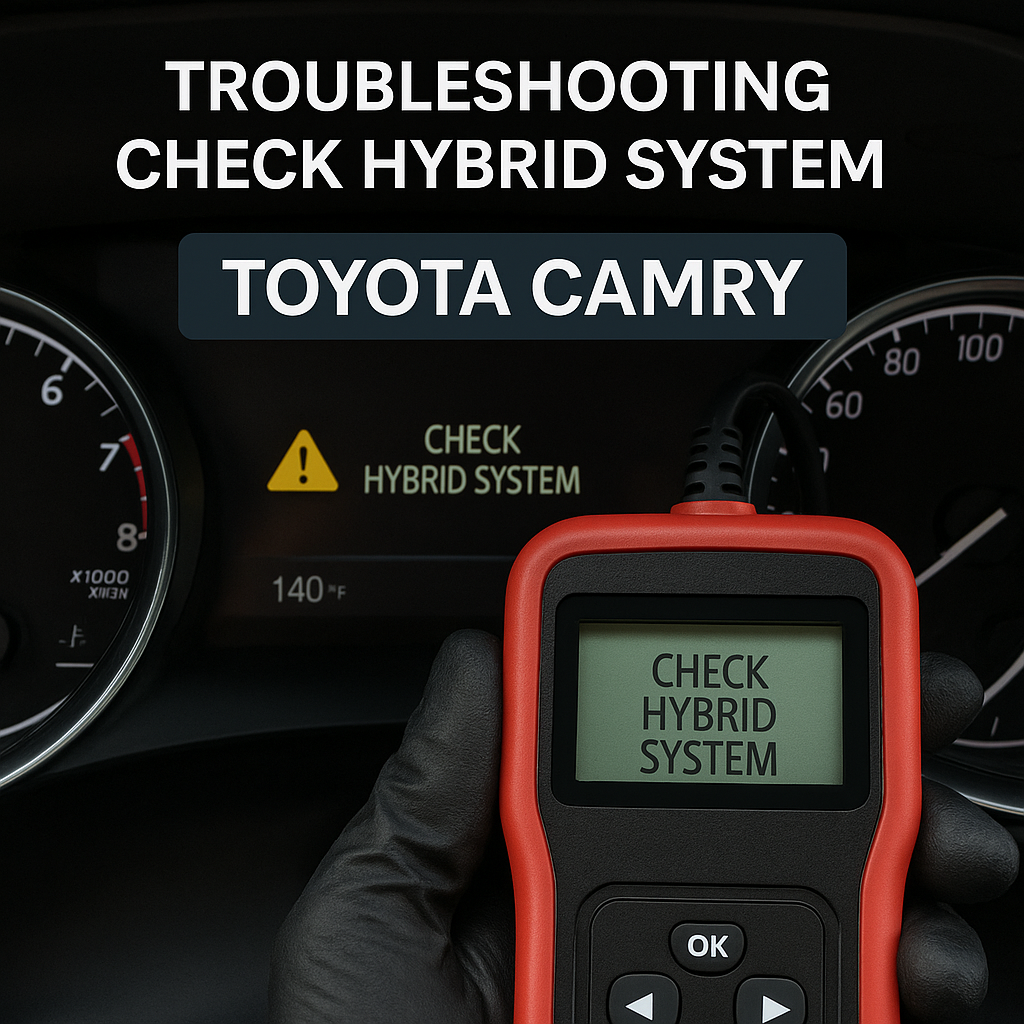
The Toyota Camry Hybrid is a standout example of eco-friendly cars. It takes the trustworthiness of the Camry and adds hybrid technology, giving you a car that’s both reliable and fuel-efficient. However, like any sophisticated machine, it may occasionally encounter issues, one of which is the dreaded “Check Hybrid System” warning. Common Causes of the Warning: The “Check Hybrid System” warning in the Toyota Camry Hybrid serves as a crucial indicator of potential issues within its advanced propulsion system. Understanding the common causes behind this warning is essential for maintaining the vehicle’s reliability and performance. Battery Issues: The hybrid battery pack is a crucial component of the Toyota Camry Hybrid’s propulsion system. Over time, the battery cells can degrade due to factors such as age, temperature extremes, and usage patterns. Excessive cycling or deep discharges can accelerate battery deterioration, leading to reduced capacity and performance. Physical damage to the battery pack, such as corrosion or leaks, can also trigger the warning. Inverter Problems: The inverter changes the power from the battery into a type that runs the electric motor. Any malfunction in the inverter can disrupt this process and lead to the “Check Hybrid System” warning. Overheating due to poor cooling or electrical faults can cause damage to the inverter components, resulting in performance issues and potential warning indicators. Electrical faults such as short circuits or component failure within the inverter assembly can also prompt the warning. Sensor Malfunctions: Various sensors throughout the hybrid system monitor critical parameters such as battery voltage, temperature, and motor speed. Malfunctioning sensors can provide erroneous data, triggering the warning unnecessarily. Sensor wiring harnesses can suffer from wear and tear over time, leading to intermittent connections or shorts. This might make the sensors give wrong information to the control unit of the hybrid system. Environmental factors such as moisture ingress or exposure to contaminants can compromise sensor integrity, leading to erratic behavior and potential warning alerts. Other Potential Reasons: Beyond the aforementioned common causes, several other factors can contribute to the “Check Hybrid System” warning. Software glitches or bugs within the hybrid system’s control software can occasionally cause false warning messages. In these situations, fixing the problem might need updating or reprogramming the software. Mechanical issues such as drivetrain problems or motor failures, though less common, can also trigger the warning. These may require extensive diagnostic procedures to identify and rectify. Faulty connections or wiring issues within the hybrid system’s electrical circuitry can disrupt communication between components, leading to warning alerts. Symptoms of “Check Hybrid System”: When the “Check Hybrid System” warning appears in your Toyota Camry Hybrid, it serves as a crucial signal of potential issues within its advanced propulsion system. Understanding the accompanying symptoms is vital for prompt diagnosis and maintenance to ensure the vehicle’s continued reliability and performance. Dashboard Warning Lights: The most obvious symptom of the “Check Hybrid System” warning is the illumination of dashboard warning lights specific to the hybrid system. These lights may include icons such as a battery, engine, or hybrid system warning symbol. Depending on the severity of the issue, the warning lights may flash intermittently or remain illuminated continuously. Different patterns or colors of the warning lights may indicate varying levels of urgency or specific subsystems affected. Performance Issues: A decline in overall vehicle performance is a common symptom accompanying the “Check Hybrid System” warning. Drivers may notice reduced power output, diminished acceleration, or a lack of responsiveness from the accelerator pedal. The hybrid system may struggle to engage or disengage properly, leading to jerky or uneven driving experiences. Fuel efficiency may also suffer, with the vehicle consuming more fuel than usual to maintain speed or power. Strange Noises: Unusual noises emanating from the hybrid system components or drivetrain can serve as early warning signs of potential issues. These noises may manifest as whining, humming, grinding, or clicking sounds, indicating mechanical or electrical abnormalities. Common sources of abnormal noises include failing bearings, damaged components, or excessive wear within the hybrid system, motor, or associated drivetrain components. Other Indicators: In addition to the aforementioned symptoms, drivers may notice other abnormal behaviors or indicators when the “Check Hybrid System” warning appears. These may include: Erratic or fluctuating engine RPMs. Unpredictable engine shut-offs or restarts. Inconsistent regenerative braking performance. Unexplained vibrations or shuddering during acceleration or deceleration. Unresponsive or malfunctioning hybrid system controls, such as the EV mode switch or hybrid drive mode selector. Reduced Accessory Functionality: Some drivers may experience issues with auxiliary systems or accessories linked to the hybrid system, such as climate control, audio, or navigation. These systems may exhibit erratic behavior, intermittent failures, or complete malfunctions coinciding with the “Check Hybrid System” warning. Noticing these signs and fixing the main problems quickly is important to keep the Toyota Camry Hybrid safe, dependable, and working well. Consulting with a certified technician or dealership for thorough diagnosis and repair is recommended to ensure the vehicle’s continued functionality. Diagnostic Trouble Codes (DTCs) Related to Toyota Camry Hybrid “Check Hybrid System” Warning When diagnosing issues with the Toyota Camry Hybrid’s hybrid system, various Diagnostic Trouble Codes (DTCs) may appear, providing insights into potential faults. Here are some common DTCs associated with the “Check Hybrid System” warning and their corresponding details: P0A80 – Indicates deterioration in the hybrid/EV battery pack, requiring attention to battery health. P0A82 – Signals degradation in the hybrid/EV battery pack, necessitating inspection and potential replacement. P0A7D – Points to a malfunction within the hybrid powertrain control module, indicating a need for diagnostic evaluation. P0A94 – Indicates a performance issue with the inverter cooling system, potentially leading to inverter damage. P0A9B – Highlights a failure within the inverter components, requiring repair or replacement to restore proper functionality. P0A7F – Suggests a decline in hybrid system performance, necessitating troubleshooting to identify and address underlying issues. P0A93 – Points to a malfunction in the inverter circuit, requiring inspection and potential repair to ensure proper operation. P0A92 – Indicates diminished hybrid system performance, prompting an investigation into potential